Alumni, Broadcom MASTERS, Intel ISEF, Regeneron ISEF, Regeneron STS
Five Society alumni headed to Oxford this fall as 2026 Rhodes Scholars
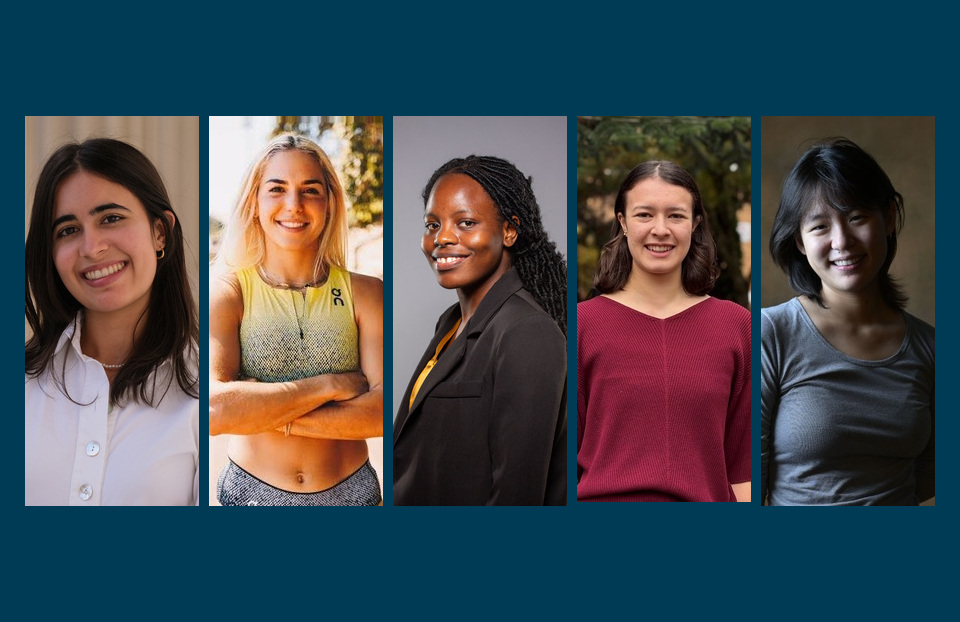
The scholars will pursue fields ranging from ecology and social data science to anthropology, theoretical physics and musculoskeletal health.
The newest class of Rhodes Scholars includes five extraordinary Society for Science alumni whose journeys began, in part, at science fair.
Aruna Balasubramanian, Sydney Barta, Vivian Chinoda, Julie Sieg and Sophia Wang participated in Society competitions as middle and high school students. This fall, all of these young women will head to the University of Oxford, where they plan to pursue research spanning the sciences, social sciences and humanities.
Though their interests have evolved in different directions, they each say their science fair experiences helped them learn how to conduct research, communicate complex ideas and see themselves as part of a global community of young innovators.
Aruna Balasubramanian: Exploring how art can transform communities
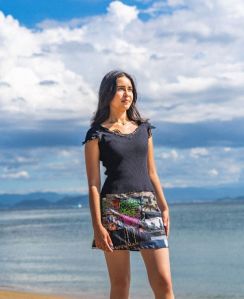
When Aruna Balasubramanian began conducting science projects as an elementary school student, she had no idea that the experience would eventually help shape her interests in language, culture and the arts.
Aruna credits Valerie Denny, her science teacher at the French International School of Philadelphia, with introducing generations of students to scientific research. With Denny’s encouragement, Aruna earned best-of-show honors at the Delaware Valley Science Fairs in both seventh and eighth grade and participated in the 2018 Broadcom MASTERS, now the Thermo Fisher Scientific Junior Innovators Challenge.
Her projects examined the complexity of human language and the grammar of birdsong.
“From my projects, I learned research methods that later inspired me in college as I studied the geometry of Indian musical scales,” Aruna said. “The poster sessions at the science fairs also developed my public speaking skills, which amplified over time.”
Aruna, now 21, is completing majors in anthropology and history at Yale. Her senior thesis is a historical ethnography of Naoshima, a small Japanese island that has used museums and art galleries to support its local economy.
At Oxford, Aruna hopes to pursue an MPhil in Social Anthropology and continue examining the role creative economies can play in the social and economic development of small towns across different global contexts. An oil painter and musician, Aruna also hopes to pursue nonfiction writing while at Oxford.
“I care about the democratization of knowledge and the public dissemination of scholarship,” she said. “Combining these passions, I want to pursue nonfiction writing at Oxford with the goal of contributing to popular journals and news outlets.”
Vivian Chinoda: Harnessing data for social impact
For Vivian Chinoda, participating in ISEF revealed just how vast and interconnected the scientific world could be. Representing Zimbabwe, she competed in Intel ISEF in 2019 and Regeneron ISEF in 2020 and 2021. Before her first ISEF, she had never traveled beyond Southern Africa.
“The most memorable part of that experience for me was walking around different booths, learning about other young people’s projects and motivations,” Vivian said.
Meeting students from across the world changed the way Vivian thought about both science and its power to connect people. “It was during my first ISEF that I began to clearly see science as more than just what I was learning in class, or even my own project and its impact,” she said. Instead, she came to view science as “a much greater medium for the global village to come together, share ideas and progress.”
Vivian, 24, graduated from MIT with a degree in business analytics. She has since worked at the intersection of business, technology and social impact, including co-founding the African Students’ Association Social Impact Fund, which supports student-led development projects across Africa.
At Oxford, she plans to pursue an MSc in Social Data Science through the Oxford Internet Institute. She is also considering a DPhil in Social Data Science or another graduate degree focused on public policy.
“It feels surreal to see myself in the position I once dreamt of,” Vivian said. “More than that, it is a privilege to be a Rhodes Scholar. My deepest thought is centered on how I can best steward my talents, interests and the access that I have to add value to the fields and societies closest to my heart,” she said.
Sophia Wang: Building a stronger relationship between science and society
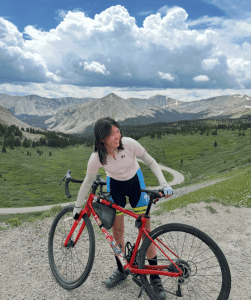
Sophia competed at ISEF from 2018 through 2020 and was named a Regeneron Science Talent Search Scholar in 2020. Her research focused on developing a real-time system that combined civil engineering, internet-connected sensors and AI to detect sinkholes.
Sophia remembers the Society’s competitions not only for the research, but also for the community she found there.
“The most memorable part was meeting other young people who were serious about and independently driven toward science,” she said. “My peers were, in many cases, even more curious, focused and scrappy than myself. Being surrounded by that level of earnestness was important for me at that age and remains important to me now.”
The competitions also taught her that research must be communicated clearly for others to understand your work. “The fair was where I first learned the importance of articulation, particularly in the sciences,” Sophia said.
After earning a bachelor’s in aeronautics and astronautics engineering from MIT, Sophia began working across engineering, sustainability and public policy. Her work has included leading a sustainability policy task force in Bhutan, conducting research at a lab in Japan and working with a venture capital fund focused on space technologies.
At Oxford, Sophia plans to pursue an MSc in Mathematical and Theoretical Physics followed by an MSc in Global Governance and Diplomacy. She hopes to examine not only what science can accomplish, but also how scientific progress should serve society.
“I’m most excited to engage in these discussions with my peers in a global cohort,” she said. A dedicated cyclist, Sophia is also looking forward to exploring the United Kingdom and nearby parts of Europe by bike, an activity she describes as both reflective and peaceful.
Julie Sieg: Advancing ecological research in a changing climate
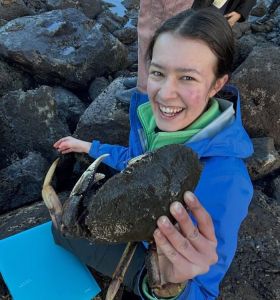
Julie Sieg participated in Regeneron ISEF in 2022, presenting research on how increasing ocean temperatures affect phytoplankton communities. Her project received a Fourth Award in the Earth and Environmental Sciences category.
“It was one of the first opportunities I had to present my research and get valuable feedback from professionals,” Julie said. “It was an amazing learning experience that really shaped my science communication skills and solidified my interest in scientific research.”
Now 21, Julie is studying biology at the University of British Columbia. Her research has addressed some of the most urgent ecological questions of a changing climate, from the decline of western monarch butterflies to the effects of temperature on the feeding behavior of shore crabs.
At Oxford, Julie plans to pursue a master’s degree in biology, with a focus on community ecology. “I am so honored to have been chosen as a Rhodes Scholar,” she said. “I am really looking forward to doing research under amazing professors.”
Julie also trained at Canada’s National Ballet School. Alongside her scientific work, she hopes to continue dancing and take a variety of ballet classes during her time at Oxford.
Sydney Barta: Connecting biomechanics, athletics and medicine
Sydney Barta who hails originally from Arlington, Virginia, participated in the 2018 Broadcom MASTERS. At Stanford, she studied bioengineering, was an elite sprinter and a member of the U.S. Paralympic National Team.
Sydney is the first Paralympian to compete on Stanford University’s track and field team. She is a five-time U.S. Paralympic Track and Field national champion, a two-time Parapan American champion and a two-time World Para Athletics medalist. She also represented the United States at the Tokyo Paralympic Games.
At Stanford, Sydney brought her experiences as an athlete into the lab. Her honors research examined how athletic training influences postural control during jump landings, part of her broader interest in biomechanics, balance and injury prevention.
She has also served in national leadership roles representing athletes, including on the U.S. Olympic and Paralympic Committee’s Collegiate Athlete Advisory Council and the Team USA Athletes’ Commission.
At Oxford, Sydney hopes to complete graduate research in musculoskeletal sciences. She ultimately hopes to become an orthopedic surgeon and bring together her understanding of medicine, biomechanics and the experiences of athletes with disabilities.
The next chapter
The five scholars’ paths demonstrate that early scientific research can lead almost anywhere. Their work at Oxford will take them in very different directions. But for all five of these young women, participating in Society competitions was an early chapter in a much larger intellectual journey.