1973 ISEF alumnus Michael Woodford wins the 2026 Nobel Prize in economics
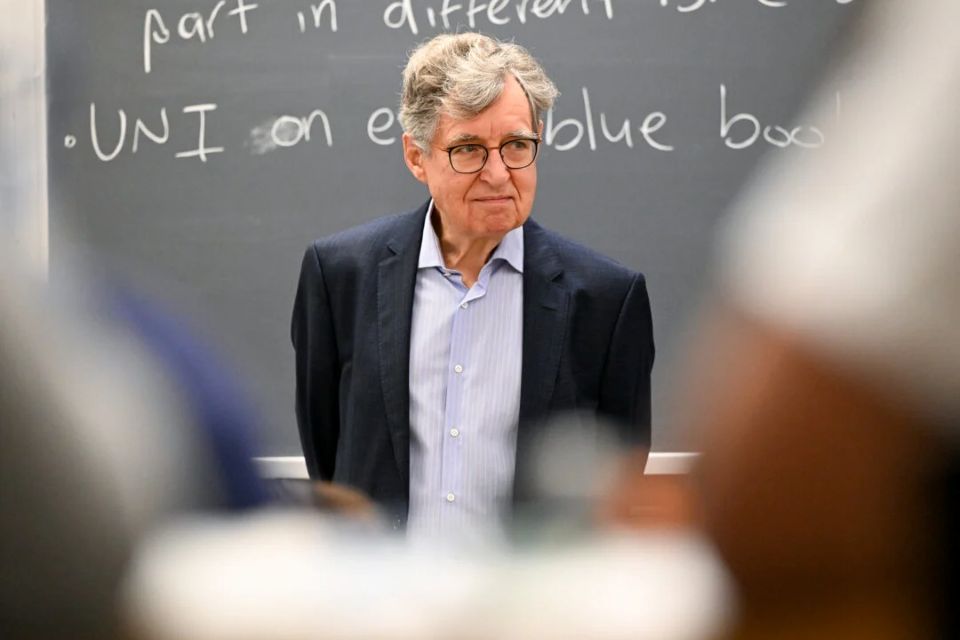
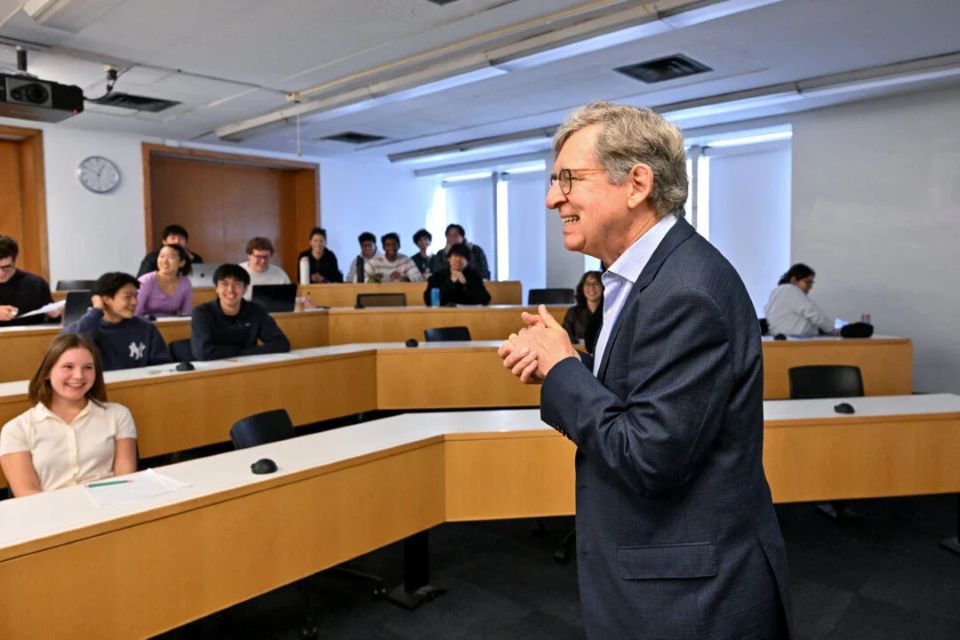
On the morning Michael Woodford learned he had won the 2026 Nobel Memorial Prize in Economic Sciences, he still had an exam to give.
His students might have hoped for a cancellation; their professor had, after all, just learned he’d received one of the world’s highest academic honors. Instead, the revered Columbia University professor arrived to his class, welcomed by a wave of cheers and applause.
Then he went on to give the test. Even a call from Stockholm couldn’t clear his calendar.
More than five decades earlier, Woodford had been a young man presenting research of his own at the 1973 International Science and Engineering Fair (ISEF) in San Diego, California, where he competed with a project titled Electromagnetic Fields and the Space-Time Continuum. Woodford’s academic interests would eventually lead him from the field of physics to economics, where his work helps explain the decisions that shape our everyday lives.
Woodford, Columbia’s John Bates Clark Professor of Political Economy, shares the 2026 Sveriges Riksbank Prize in Economic Sciences in Memory of Alfred Nobel with Stanford University economist, Robert E. Hall.
Woodford and Hall developed models that explain how the everyday decisions of households and businesses affect the economy as a whole. These models help central banks and governments decide when to encourage economic activity or slow it down, with the goal of keeping the economy more stable and avoiding prolonged booms and downturns.
At a reception celebrating his Nobel Prize, Woodford credited his students with helping shape his research, according to Columbia News. “A lot of what I have done has only been possible thanks to my students, because it was hard for me to work these things out except by trying to explain them to people and having students who are willing to put up with that,” he said. “It is essential to the intellectual process, at least in my case.”
He also reflected on his students’ accomplishments: “I’ve been gratified that many went on to have distinguished careers, and I hope I have some responsibility for that, but, really, I’m grateful just to have had them as students. That’s really been essential to me.”
Responding to a congratulatory note from Society for Science President and CEO Maya Ajmera, Woodford wrote, “I believe, as you do, in the value of encouraging young people to pursue research.”
That appreciation resonates deeply with Society for Science’s work and mission to give young researchers the opportunities to develop and share their ideas from a young age. Once an ISEF finalist presenting his own research, Woodford now credits his students with helping advance his thinking. His reflections serve as a reminder that teaching is also part of the research process.
Woodford joins a distinguished group of Society for Science competition alumni recognized with Nobel honors, including economist Alvin Roth (STS 1968), physicist Frank Wilczek (STS 1967) and chemist Paul Modrich (STS 1964; ISEF 1964). Their work spans disciplines, but their histories share an early chapter of bringing their questions to a Society for Science science competition.
Watch Michael Woodford discuss his research and the Nobel recognition here.