Conversations with Maya: Shantanu Gaur
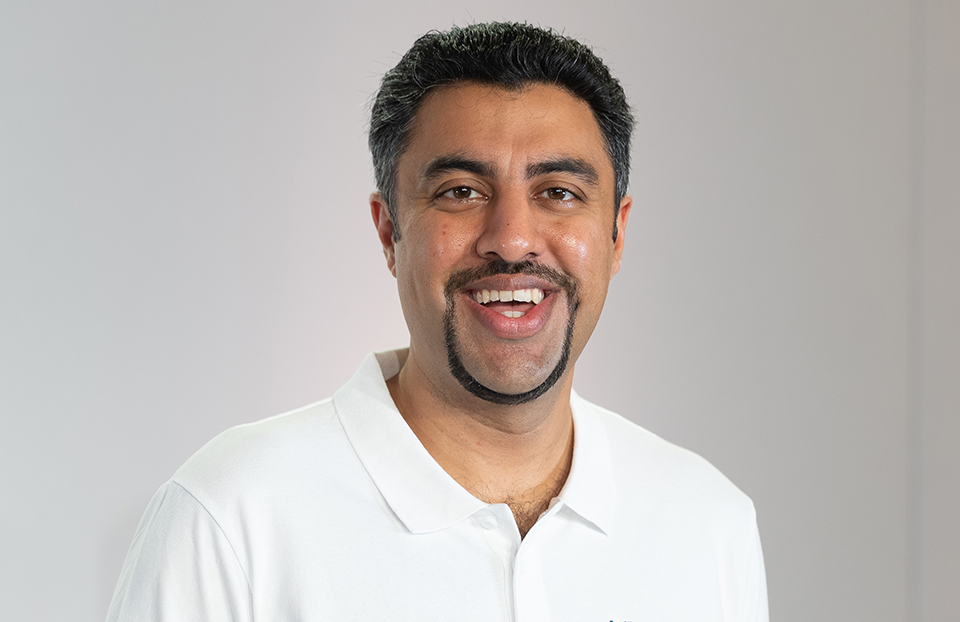
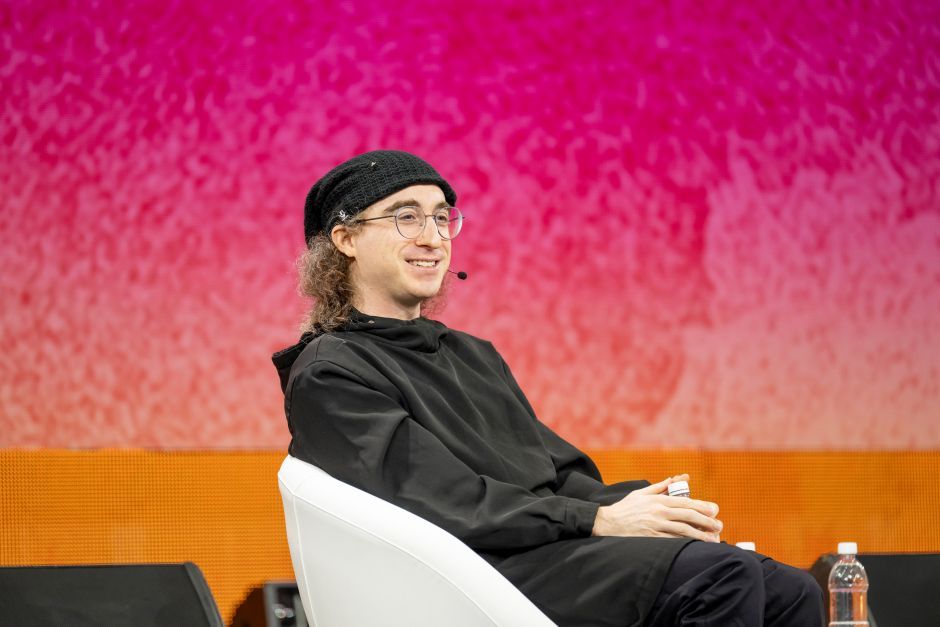
Maya Ajmera, President & CEO of Society for Science and Executive Publisher of Science News, sat down with Shantanu Gaur, Founder and CEO of Allurion Technologies, who created an FDA approved medical device for the treatment of obesity. Gaur is an alumnus of the 2003 and 2004 International Science and Engineering Fair (ISEF), a program of Society for Science. A graduate of Harvard College with an M.D. from Harvard Medical School, Gaur has more than 40 patents. Gaur also serves on the Society’s National Leadership Council.
You competed at ISEF in 2003 and 2004. What impact did that have on you and your career?
Twenty years later, two things still stick out to me. One, ISEF was the first time I had an opportunity to see what exceptional science and engineering really looks like. I grew up in a small town in southwestern Pennsylvania, and suddenly I was standing alongside students from all over the world doing genuinely cutting-edge work. It was eye-opening. I could see a level of talent I hadn’t encountered before, and it motivated me. It also gave me a sense of community. I had aspirations to become a scientist, and for the first time I felt like I wasn’t alone in that. I was surrounded by people who shared the same drive.
For my junior year ISEF project, I studied a rare genetic mutation in the Afro-Caribbean population of Trinidad and Tobago that raises the risk of prostate cancer. We investigated whether screening for that mutation could help to ensure that the limited resources in Trinidad and Tobago could go to those patients at highest risk. During my senior year, I worked with chicken embryos on a protein involved in retinal development. It was my first time doing wet-lab work with a live specimen. In my senior year project, I learned about the power of negative results to advance a field and so much about the joys and challenges of wet lab science.
You founded Allurion while you were still in medical school. What made you choose that path, and what did the people around you think?
Allurion started as a weekend project — something my classmate Sammy and I found interesting outside of class. As we got encouragement from faculty, I eventually had to decide whether to finish my residency or leave to build the company. I went to my dad, who’s a math professor, for advice. And he laid it out in stark, quantitative terms: As a physician, you have one pair of hands. You’ll see patients for decades and touch the lives of maybe 100,000 or 200,000 people, and that’s a meaningful, fulfilling career. But if you build a company around a real problem, you have the potential to touch the lives of millions. There is a risk, however, that if your business never gets off the ground, you may touch no one’s life. He asked me a simple question: Do you want to maximize your life for impact or not?
That question is what pushed me toward Allurion and has shaped everything else in my life since. My advice is to take the risk and work on big problems because the potential payoff, in lives changed, can be enormous.
Obesity is one of the most complex and stigmatized conditions in medicine. What convinced you it was the problem worth solving?
Two billion people worldwide are overweight, and a billion have obesity. More people die every year from obesity-related disease than died from COVID-19 at the height of the pandemic. It’s the health issue of our generation, and like other chronic diseases, it’s not going to have one miracle-pill solution. As a second-year medical student, one of the patients I met was a young woman who’d had bariatric surgery. She spent weeks in intensive care afterward and ultimately recovered, but seeing how physically and emotionally invasive that experience was, my classmate and I kept thinking: There has to be a better way.
How does the Allurion balloon work?
The whole concept behind Allurion is this: Could we develop a non-surgical way of getting a device inside the stomach so that it can start helping people feel full? We know that bariatric surgery works because it reduces the volume of the stomach. Why not put something inside the stomach instead and avoid the surgery?
We developed a capsule with a balloon inside it that is attached to a thin tube, about the width of a piece of cooked spaghetti. A patient swallows the capsule in a doctor’s office. Once it’s in the stomach, we attach a bag of water to the tube and fill the internal balloon over about five minutes, with no anesthesia or sedation. Once the balloon is filled — about half a liter, weighing around a pound and a quarter — we withdraw the tube and the patient goes home with what amounts to an implanted meal sitting in their stomach. The human stomach is roughly the same size in every adult regardless of height or weight, so one size fits nearly everyone. The balloon stays in place for four months and is there to give patients time to build new habits, without invasive surgery or taking medications.
Were there moments you almost gave up?
Constantly. There’s a line from Angela Duckworth’s book Grit: The Power of Passion and Perseverance that captures it for me: “Enthusiasm is common, endurance is rare.” Every startup begins with excitement about the science and the vision, and then you actually have to build it. That’s when you realize that if building a company were easy, everyone would be doing it.
When we were raising our first round of financing, we went to a hundred investors and got a hundred nos. We were medical students with no business or engineering background, trying to fund a device we’d only demonstrated by filming a prototype pushing against the walls of an animal’s stomach. After our savings ran dry, we scraped together $25,000 and $50,000 at a time from family, friends and professors to fund our first real animal and human studies.
Even today, some investors still doubt there’s room for a technology like ours, especially with GLP-1 drugs on the market. The lesson is that there will always be more people who doubt you than believe in you. The job of an entrepreneur is just to keep enduring, because changing minds takes years.
What role does AI play at Allurion, and where do you see it going in medical devices more broadly?
We don’t use AI in the balloon itself, but it’s central to our digital platform. Managing any chronic disease — obesity, diabetes, hypertension — ultimately comes down to changing daily habits, and there simply aren’t enough dietitians and coaches in the world to support the two billion people who want to lose weight. Our app includes a conversational AI coach, Iris, that looks at a patient’s data and nudges them accordingly — reminding them to weigh in or serving up content on sleep if that’s where they’re struggling.
Beyond the patient experience, AI is changing how we run the company: we use it to analyze product complaints, track lot history and monitor regulatory changes across the more than 80 countries where we’re approved. I don’t think AI will change what a medical device physically is, but it’s already changing how devices are developed, personalized and supported over time.
What’s next for Allurion?
We have an exciting pipeline at Allurion. We are working on a version of the balloon that stays in the stomach for a full year instead of four months and one that could function as a platform — slowly releasing a GLP-1 medication, vitamins or something that supports the gut microbiome rather than just occupying space. With 2 billion people around the world in need, even after all these years, we have only just begun.
What books did you love as a child and what are you reading now?
I loved historical fiction as a child, with the Civil War trilogy Gods and Generals, The Killer Angels and The Last Full Measure at the top of the list. Now, I am working my way through The Obstacle is the Way, a must-read for any scientist or entrepreneur!
What worries keep you up at night?
I worry that in a world of abundance, fueled by the technological advances made possible by AI, that knowledge and power becomes more — not less — concentrated. I want my children and their children to live in a world where knowledge is abundant and accessible and anyone has an opportunity to advance a world-changing idea.
What gives you hope for the future?
Entrepreneurs give me hope for the future. Every problem has a solution, and I take comfort in the fact that humans will inevitably find the solutions to any problems that imperil our future.