What Ted Hoff, the Inventor of the Microprocessor Told the Nation’s Top Young Scientists
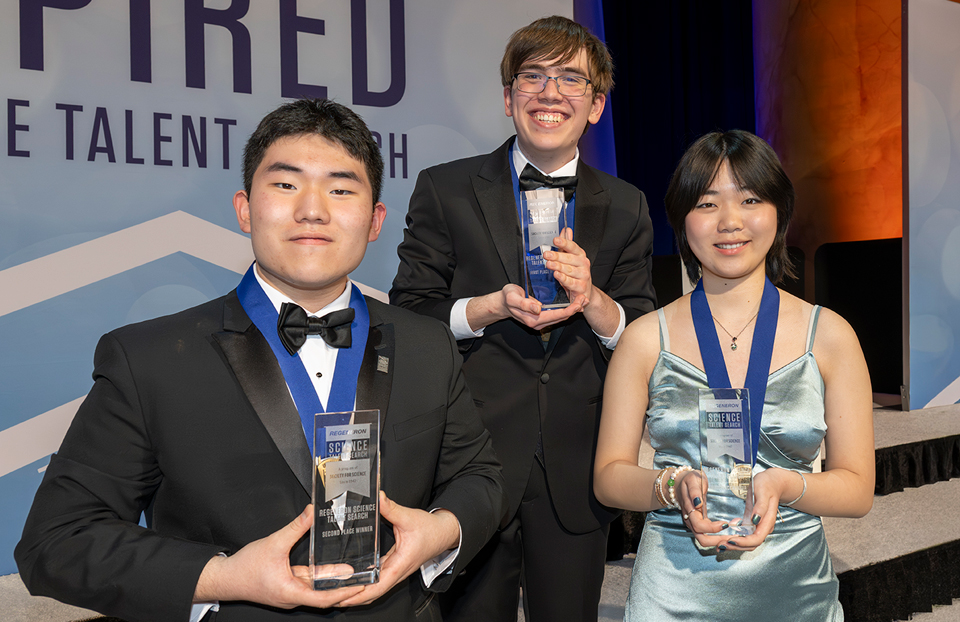
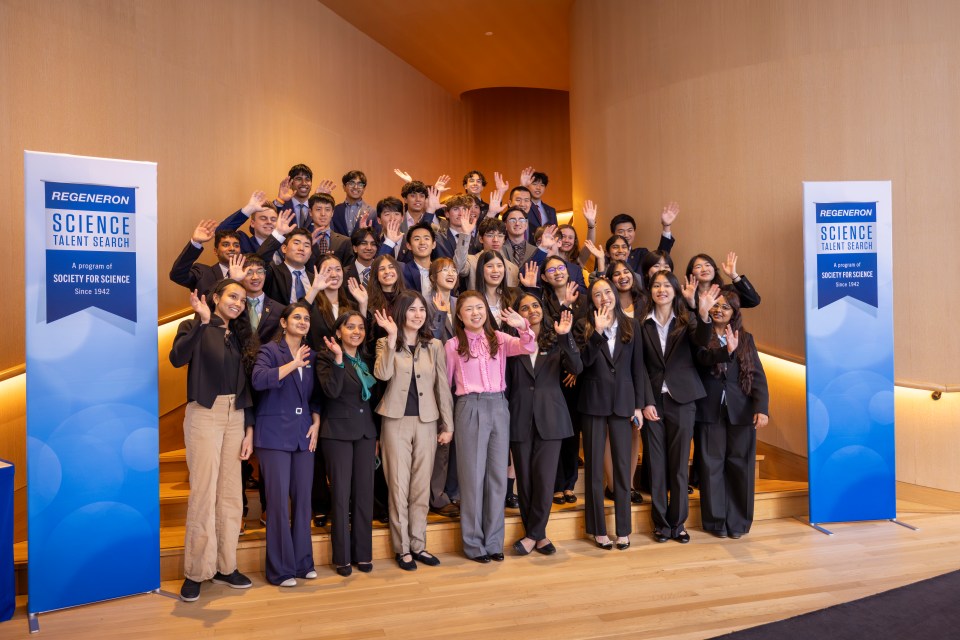
The Regeneron Science Talent Search is the nation’s oldest and most prestigious science and math competition for high school seniors. This year’s top 40 finalists were selected from more than 2,600 entrants from across the country.
Their promise as scientific leaders is reflected not only by the quality of their research and their unquestionable ability. But their potential is also written in the stories of the finalists who have stood in their shoes over the last 84 years.
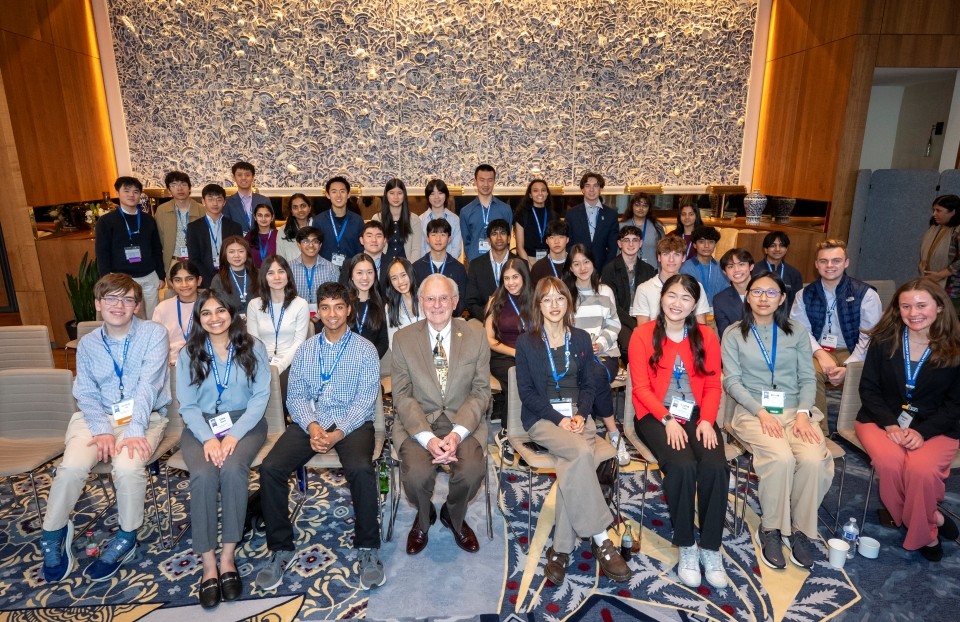
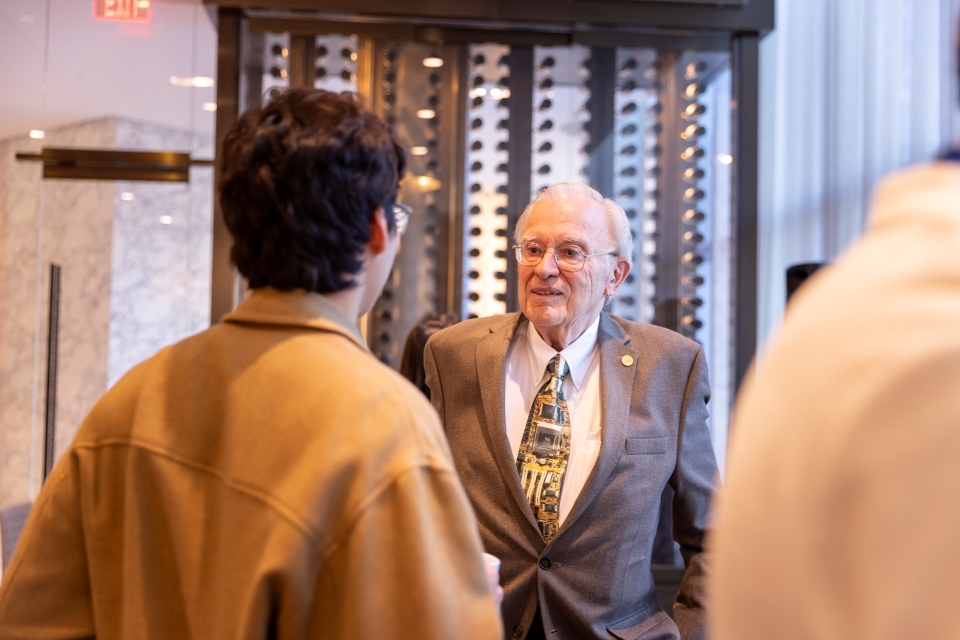
This year, finalists heard from one such STS alum, Marcian “Ted” Hoff (STS 1954), the twelfth employee at Intel and inventor of the microprocessor. He is a member of the National Inventors Hall of Fame and a recipient of the National Medal of Technology and Innovation.
Ted sat down with the finalists for a fireside chat, where he shared his journey and answered finalists’ questions. Below are some excerpts from the conversation.
When you began at Intel, what problem were you trying to solve that led to the invention of the microprocessor?
“When I first got involved with that project, we had agreed to build a set of custom chips for a calculator company. Three engineers came from Japan with a design they wanted built, and the more I looked at it, the more concerned I became. They had separate control chips for the keyboard, display, printer, memory and arithmetic.
“The idea I came up with was that instead of building all these different chips, we could make a general-purpose processor and put the complexity into memory, instead of wiring it into the chip itself. You can write the code for that memory on a piece of paper, and then there’s a standard way of putting it into the memory, so you don’t need a new chip layout every time.
“That meant the same hardware could be used for many different applications. What started as a solution to designing the calculator turned out to have many other uses. One thing I learned is that ideas often come from things you did earlier that didn’t seem connected at the time. Some of these disconnected experiences can turn out to be very useful in the long run.”
As someone who laid the foundation for modern computing, what questions and considerations do you think are most urgent as we advance AI systems today?
“We’re building more powerful processors, smarter processors, where the artificial intelligence can get well beyond the typical human intelligence. An important question becomes, ‘What is the role of the human in that society?’
“I think one of the things future generations really have to think about is not just what we can do, but the impact of what we do. There are many problems in the world, and it isn’t always obvious what the best solution is. You have to be careful about putting technology into use before it’s ready. It may be a great development eventually, but when something is introduced before all the details are worked out, that can be hazardous.
“When I went to engineering school, Rensselaer, was an all-male school. I think the year I graduated, there were only two women in the entire school body,” Ted said. “Well, our youngest granddaughter is now at Cal Poly, studying mechanical engineering.”
He pointed to that contrast with today, where far more women are entering and leading in STEM. For Ted, that shift underscores the importance of “broadening the view,” and bringing more perspectives to not just what we build, but how we think about its impact.
How did it feel to join Intel when it was still a very young company, and what advice do you have for navigating risk or the unfamiliar?
“When I joined Intel, there was definitely some risk. I was at Stanford at the time in what looked like a very secure position, supported by government research contracts, and things seemed to be going well. Leaving that to go to a brand-new company was not an obvious decision. Sometimes you have to make your best guess and accept that there are no guarantees.
“Interestingly, not long after I left, there were protests at Stanford about government-supported research, and the university decided to move a lot of that work off campus. If I had stayed, I might have been looking for a job anyway.
“That was eye-opening. Things that seem secure may not be, and things that seem risky can work out very well. My advice is to make the best decision you can with the information you have, and don’t be afraid of something simply because it’s new or uncertain. That’s often where the most interesting opportunities are.”