Thermo Fisher JIC finalists explore coastal science at the Smithsonian Environmental Research Center
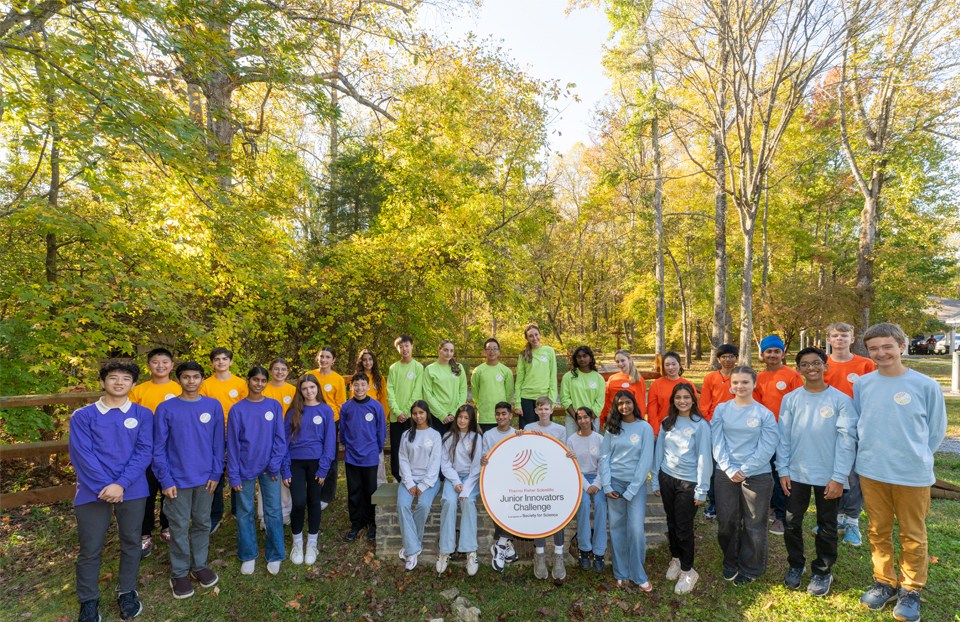
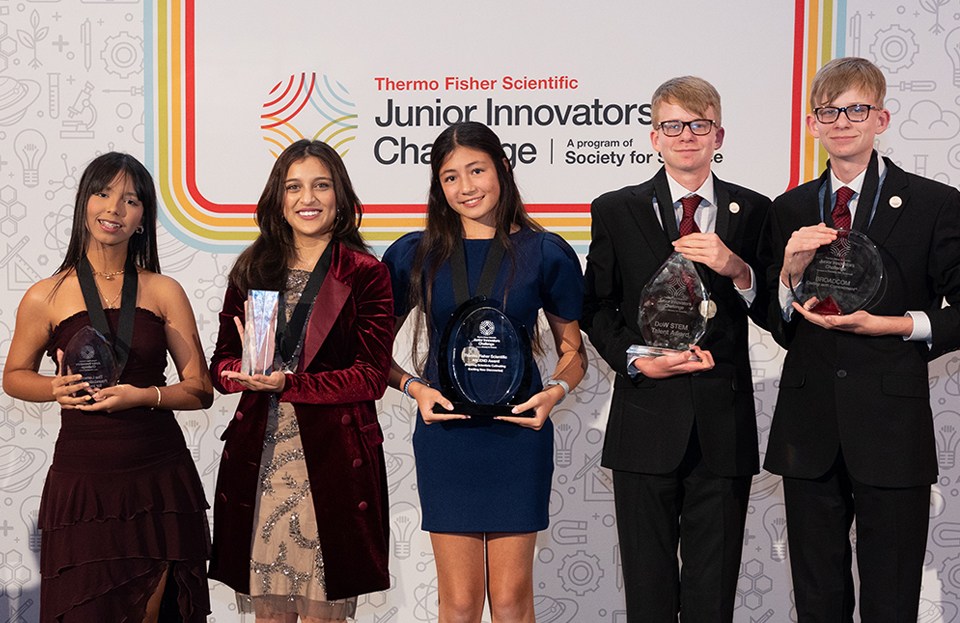
The 2026 Thermo Fisher Scientific Junior Innovators Challenge (Thermo Fisher JIC) brought together 30 of the nation’s brightest young scientists to Washington, D.C. for an action-filled week of friendly STEM competition and team collaboration.
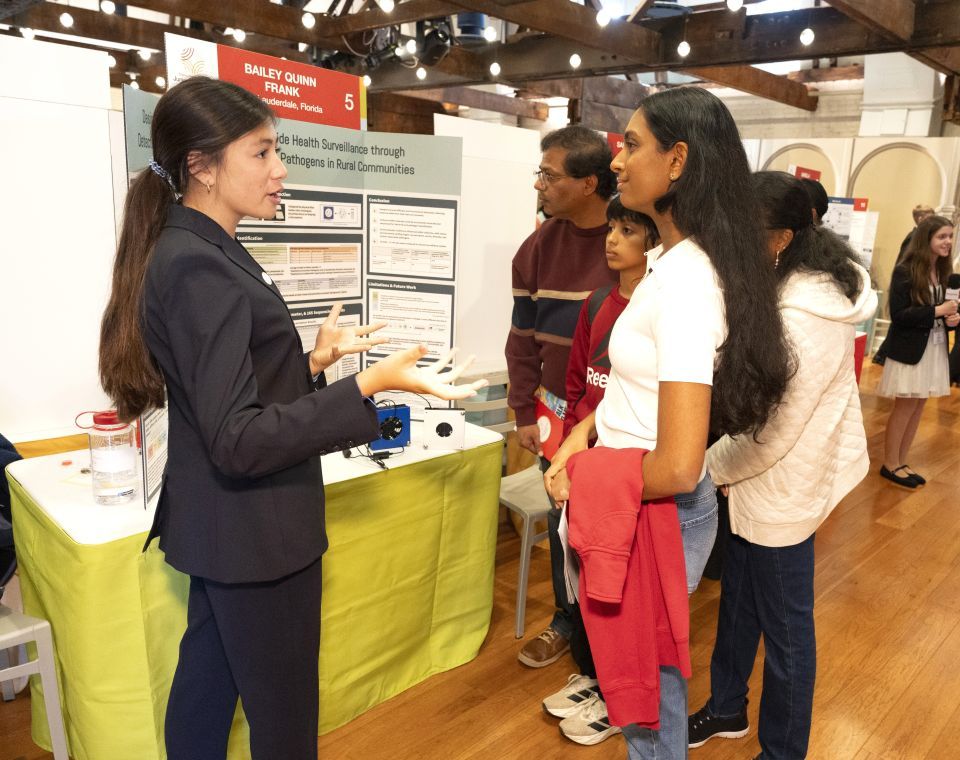
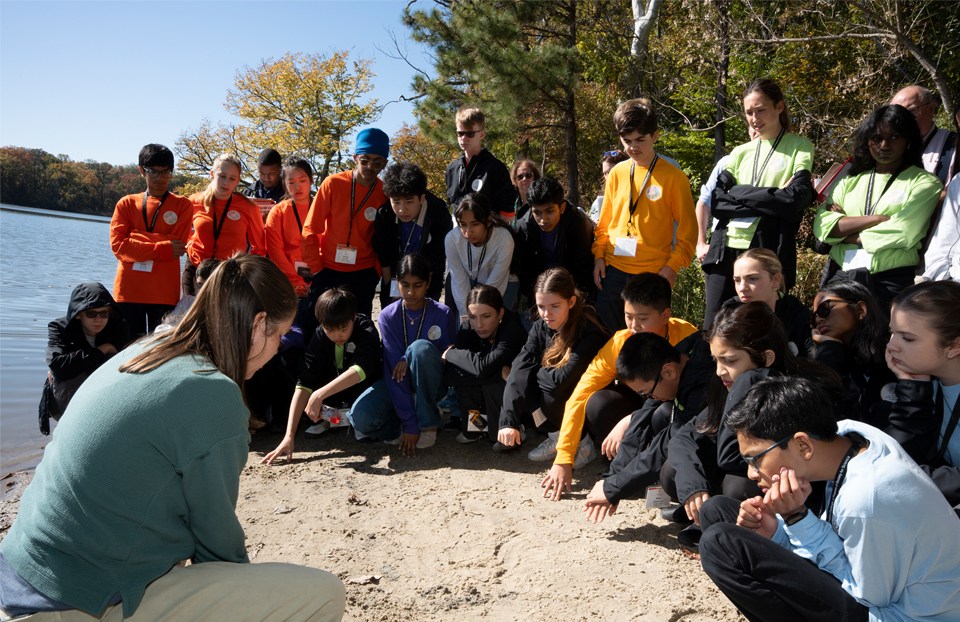
After presenting their research projects to judges and the public at the project showcase, the finalists got some fresh air in the Chesapeake Bay. For their final day of challenges, the finalists traveled beyond Washington, D.C. to be one with nature at the Smithsonian Environmental Research Center (SERC), a facility with more than 200 scientists in a 2,650-acre outdoor space researching coastal ecosystems, forests and the Bay.
At the Philip D. Reed Education Center, finalists received instructions for their first challenge. Next, SERC’s Education Director Karen McDonald welcomed the finalists to their packed day focusing on terrapins, a type of turtle native to the Chesapeake Bay region.
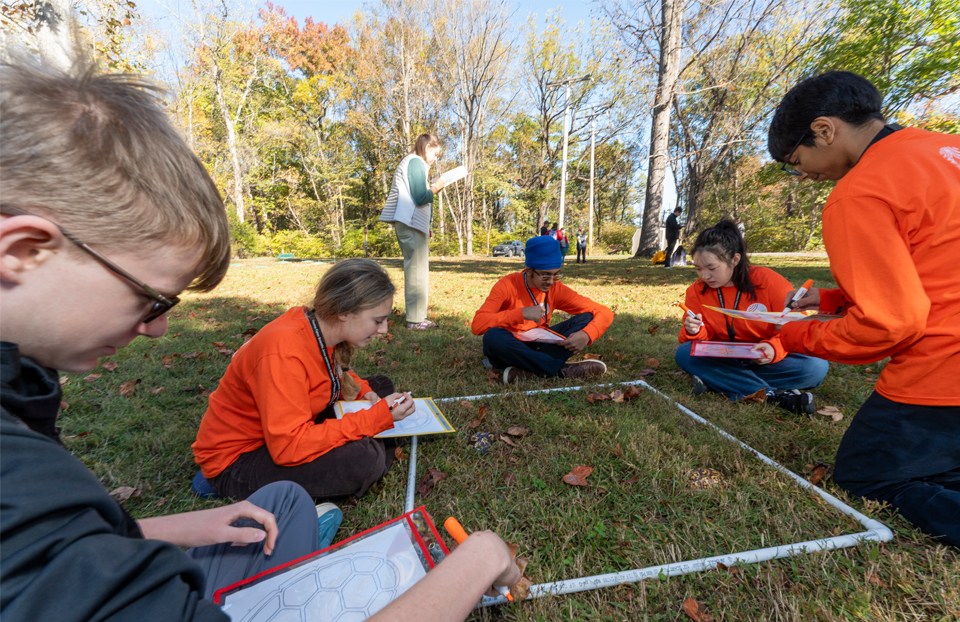
In the morning challenge, finalists acted as turtle researchers and used their observational skills to draw out patterns of terrapin shells that were embedded in the grass and thought about what issues AI may run into with a similar task. SERC education specialist Haley Jackson guided the finalists to really think about the details of the shells in their drawings so others could identify what type of terrapin they were observing.
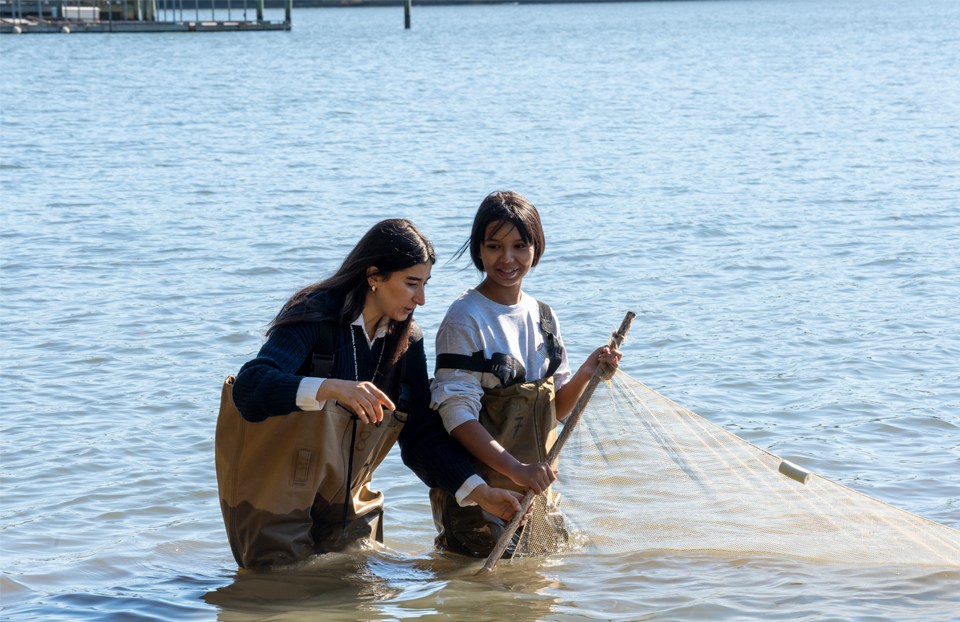
Afterward, finalists put on waders and marched into the brackish water to look for biodiversity in different parts of the Rhode River. Led by a volunteer, the finalists learned how to safely step into the water and collect aquatic organisms using a seine net.
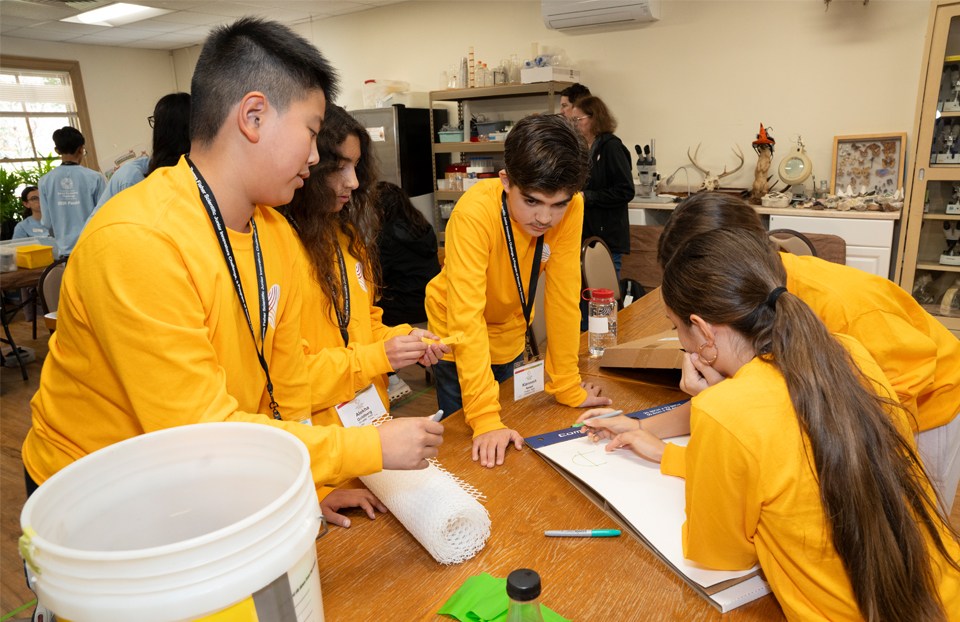
In the afternoon, finalists put their morning lessons into practice with a distinct Maryland challenge: protecting terrapin nests. After learning about predators that threaten diamondback terrapin nests, finalists worked in teams to construct and build protective enclosures to keep their simulated nests on the beach safe.
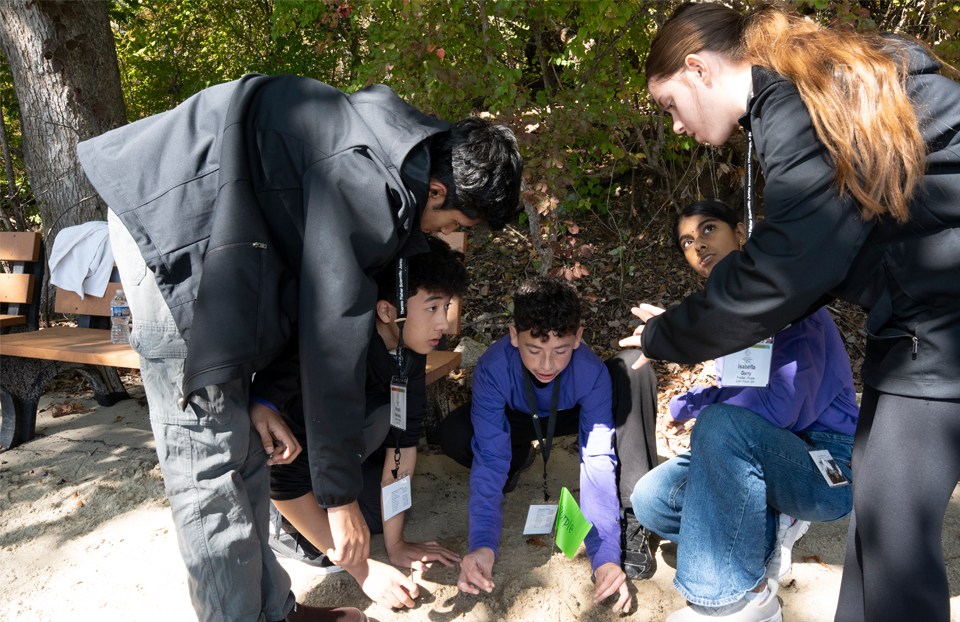
Here’s what some of the finalists had to say about their day at SERC!
“Something new I learned today was about turtles; I didn’t know that their sex, whether they become male or female, can depend on the temperature of their nest.”—Wileidy Enid Feliciano-Rivera, Silver Team
“My favorite part of today was the ocean activity. It was really fun trying to catch fish, and it was a unique experience actually trying to pick them up. I really enjoyed being out in the wild.”—Jack Grover, Orange Team
“I was definitely a little nervous going to wade in the water to study marine biodiversity, so it was a new experience I’ll remember forever—the feeling of the water pressing against my legs and looking to see what we caught in our net before releasing them. I also learned how areas really close to each other can vary in biodiversity including woody, open and sunny water.”—Virinchi Madireddy, Purple Team
“I learned a lot about turtles! I didn’t know that a specific species of turtles is semi-aquatic or that there is an artificial island that is now home for these animals. We learned about their habits and got to investigate and act like researchers in the field.”—Isabel Rossi, Blue Team
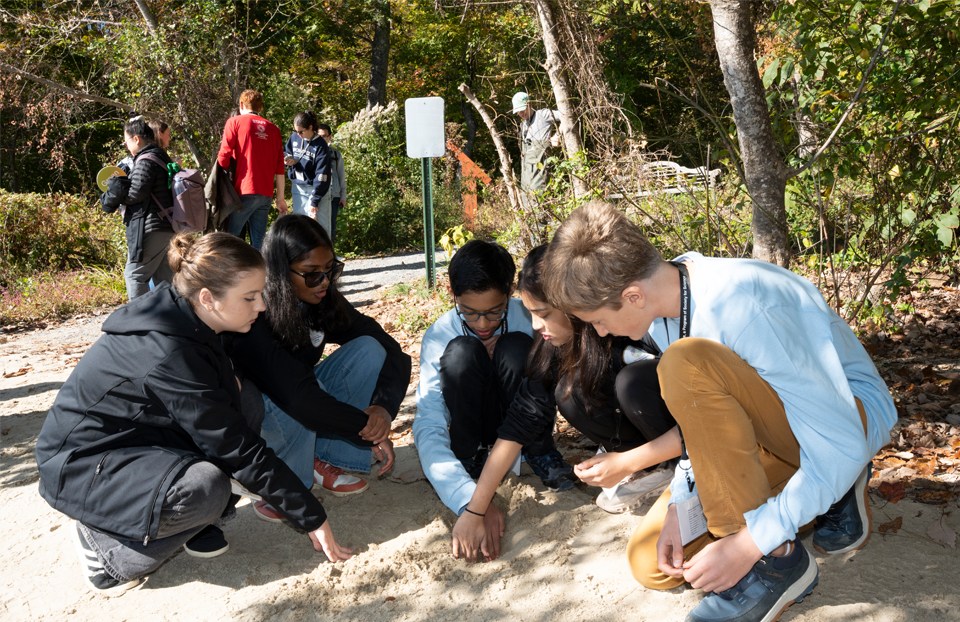
“It’s extremely important to work as a team so we can complete the challenges in an orderly fashion and delegate tasks effectively so everyone can contribute and show their expertise. Additionally, when conflict occurs, collaborating as a team is beneficial to be able to solve problems efficiently without argument.” —Andrew Sun-Zhuang, Gold Team
“It’s important to work as a team because everyone brings different strengths, communication styles, and weaknesses to the table. When you combine a group of people, everyone builds off of each other to create something special that couldn’t be done alone.” —Lilly Swigert, Orange Team
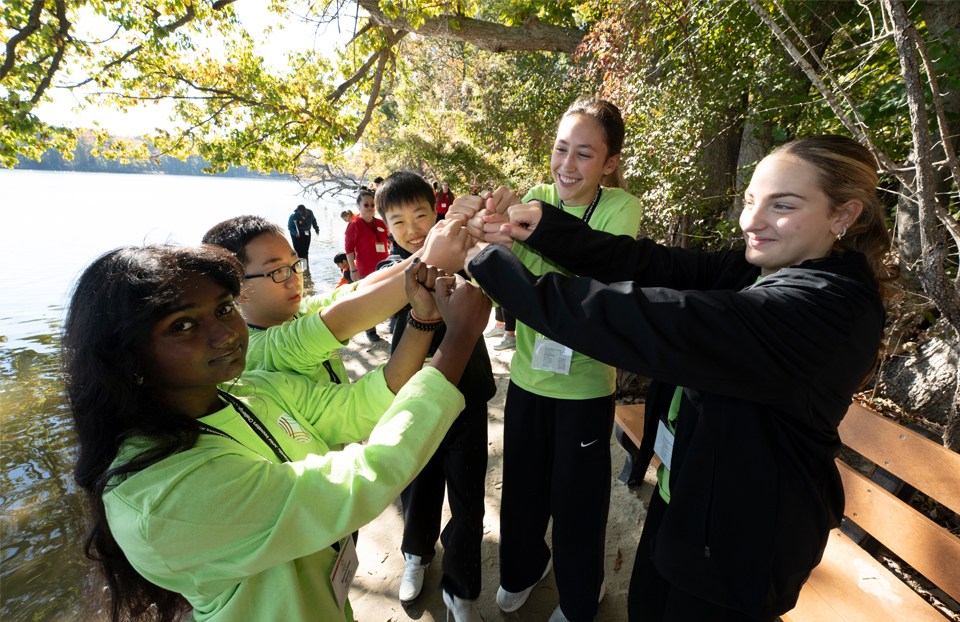
“My favorite part at the Smithsonian Environmental Research Center was spending time with my friends and learning more about what scientists do and how they change our world day by day! It also allowed me to experience something I’ve never done before. I am excited to see what my future holds for me, this has changed my life!”—Locklyn Ward, Green Team
Thermo Fisher Scientific Junior Innovators Challenge 2026 Science and Engineering Project Showcase