Science starts anywhere
Whether it’s at the kitchen table or in the living room, middle schoolers show they don’t need a sophisticated lab to innovate.
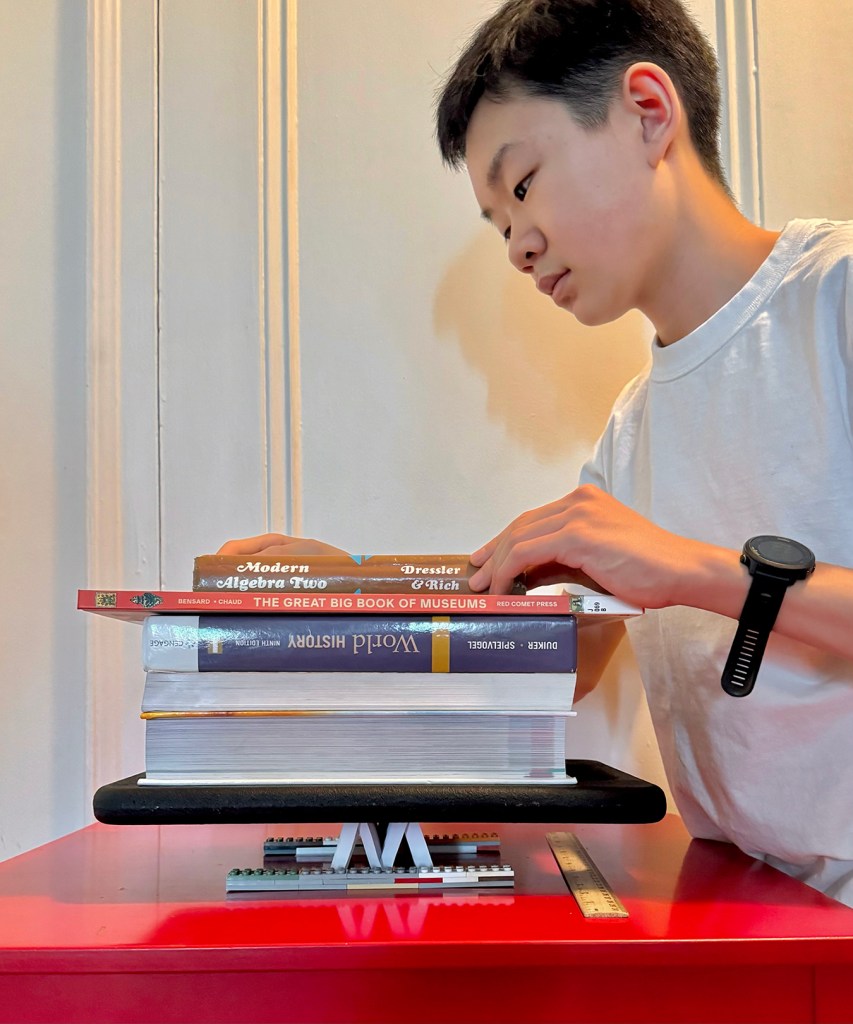
For most people, the term “scientific research” conjures a formal laboratory filled with specialized equipment and scientists in white coats. But for Miles Wu, the 2025 winner of the nationwide Thermo Fisher Scientific Junior Innovators Challenge (Thermo Fisher JIC), the four walls of his family’s apartment became his lab as he explored how the ancient art of origami could help solve modern engineering challenges.
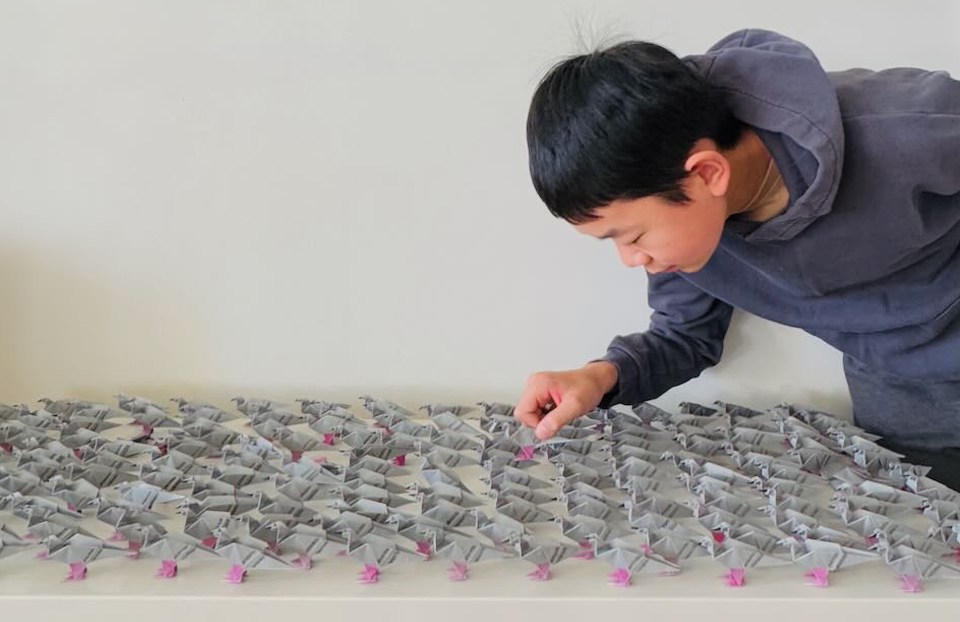
At a small desk in his family’s New York City living room, 14-year-old Miles built a makeshift testing station using plastic bricks as guardrails. Exercise weights, soup cans and textbooks held his experiments in place. His primary tool was even simpler: a piece of paper.
Miles loves origami. What began as a fun hobby when he was seven years old, eventually became a passion for the engineering behind origami, and how art and science could help address real-world needs.
One fold in particular, Miura-Ori, caught Miles’ attention in middle school and would eventually lead him to earn the coveted top prize of $25,000 at the 2025 Thermo Fisher JIC, a program of Society for Science and the premier U.S. STEM competition for middle school students. His rigorous research and curiosity reinforce the idea that sophisticated labs and equipment aren’t always necessary to drive innovation.
Miles learned that the fold’s easily compressible repeating pattern of parallelograms could be applied across a variety of STEM fields. After reading about people displaced by natural disasters, he began thinking about how the fold’s strength and compressibility could one day be used to create lightweight, portable shelters for people in need. For his eighth-grade science fair project, he set out to determine how he could optimize its strength-to-weight ratio.
Miles changed just a few variables at a time – including the weight of the paper and the steepness of each fold – to understand what made the structures stronger.
“During my testing, I organized hundreds of Miura-Ori into old shoeboxes and paper grocery bags that covered almost every surface in my family’s living room,” Miles said.
After 250 hours of testing, Miles found that the lightest Miura-Ori with the smallest and least acutely angled panels had the greatest strength-to-weight ratio, holding more than 10,000 times its own weight.
Like Miles, many Thermo Fisher JIC finalists started their research at home using household items or inexpensive materials, proving that scientific discovery is within closer reach than some may think.
“When students get curious about their environment, they start asking questions, testing ideas and uncovering their potential,” said Meron Mathias, vice president, corporate social responsibility & sustainability, Thermo Fisher Scientific. “Programs like the Thermo Fisher JIC fuel that discovery by recognizing young people of all backgrounds who pursue their curiosity with whatever tools they can access. By supporting them, we’re ensuring a more innovative, inclusive future for society.”
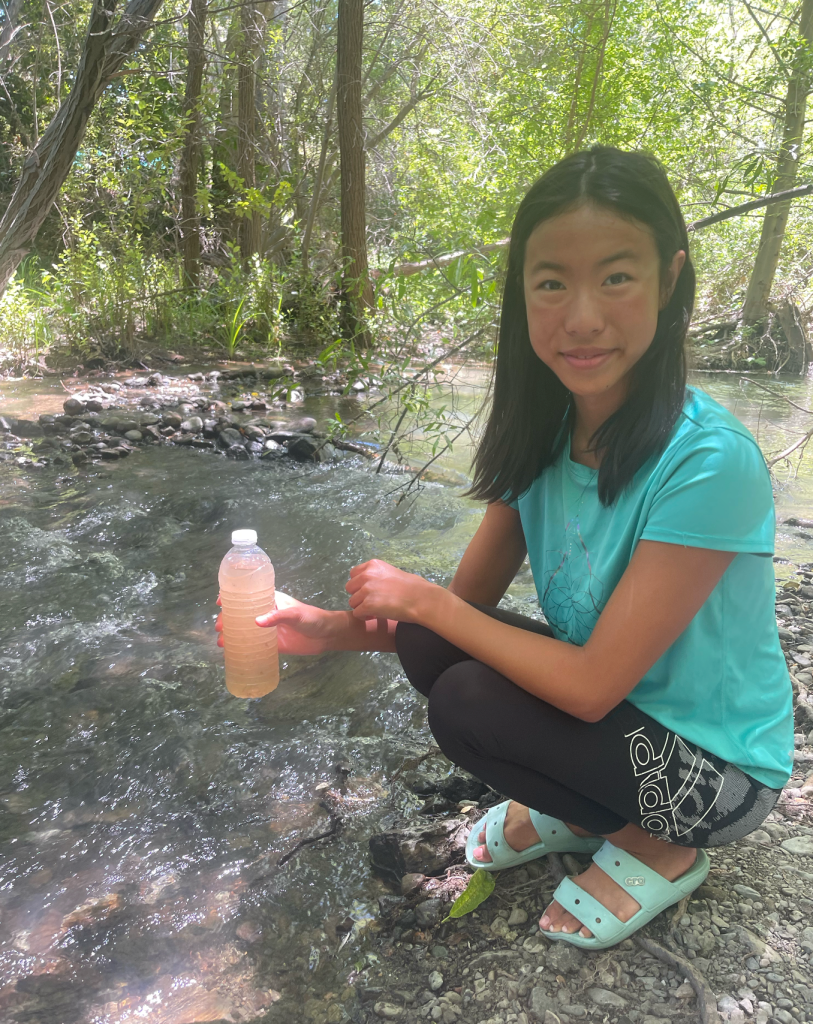
For former Thermo Fisher JIC winner Tina Jin, curiosity led her to find inspiration for her research in a particularly familiar and unremarkable place: the dinner table.
Tina had just learned about the global lack of access to clean drinking water and was researching potential solutions. Then, one night after finishing a bowl of soup at home with her family, she noticed that the porous structure of the leftover bones resembled materials used for water filtration. Her observation led her to develop a prototype filter made entirely of natural and household materials.
“Now when I look at everyday objects, I think, ‘What are their properties? And how could those properties help solve a real-world challenge?’” Tina said.
Competitions like the Thermo Fisher JIC are a critical piece of the STEM learning ecosystem because they promote curiosity in a way that complements and accelerates what students are learning in the classroom.
“The Thermo Fisher JIC isn’t just about proficiency in STEM. As students progress through the competition, they gain hands-on experiences that expand their sense of possibility, teach them to collaborate effectively, build their confidence and help them develop skills they’ll carry well beyond Finals Week,” said Meron.
Hands-on scientific inquiry is strongly associated with higher science scores. In the latest National Assessment of Educational Progress science assessment, conducted in 2024, 63% of eighth graders with higher science scores said they often or always used evidence from experiments in science class to explain why something happens, compared with 32% of students with lower science scores.
The demand for talent is higher than ever, with STEM jobs projected to grow three times faster than non-STEM jobs in the US between 2024 and 2034. Unfortunately, according to the 2024 NAEP science assessment, only 28% of U.S. eighth graders reported a high level of interest and enjoyment in science (down from 38% in 2019) and only 28% reported high confidence in their science knowledge and skills (down from 34% in 2019), which makes middle school an incredibly important window to engage and support students in STEM.
“Middle school is such an important time to nurture a young person’s curiosity,” said Maya Ajmera, president and CEO of Society for Science and executive publisher of Science News. “Students are beginning to discover what excites them and what they’re capable of. Giving them meaningful opportunities to ask questions, test ideas and experience the thrill of discovery can help them see themselves as scientists and carry that confidence and sense of possibility into high school and beyond.”
The Thermo Fisher JIC reaches more than 60,000 middle school students each year through roughly 300 Society for Science-affiliated fairs across the country and U.S. territories. Students in the top 10% of their Society-affiliated fairs are eligible to enter the Thermo Fisher JIC, with an independent panel of evaluators and judges selecting the Top 300 students and then the Top 30 finalists. Those finalists present their research and engage in team challenges during Thermo Fisher JIC Finals Week in Washington, D.C.
“After presenting their research to the judges, you’ll see one student start explaining something they’ve been working on for months, and suddenly three of their peers are leaning in and asking questions,” said Meron. “Those moments are a great reminder of what happens when you bring curious young people together and give them the opportunity to learn from one another.”
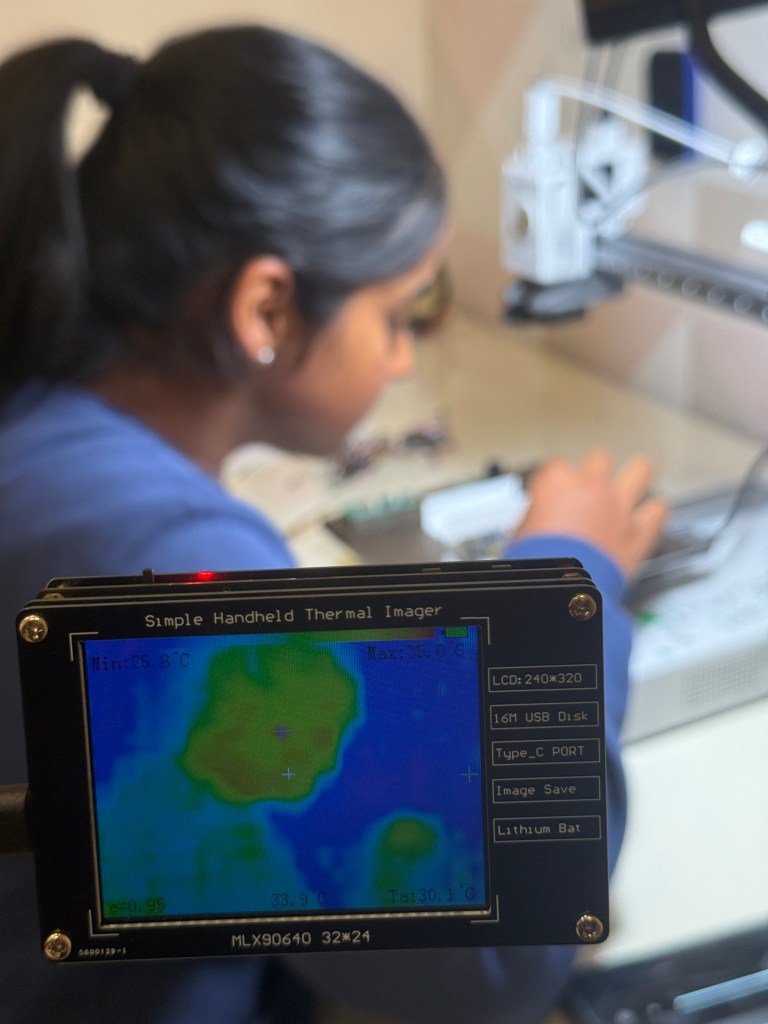
“I love getting together with friends and learning with them because it makes problem solving more fun and playful, which is how STEM should be,” said Shanya Gill, winner of the inaugural Thermo Fisher JIC.
As a sixth-grader, Shanya began investigating fire safety after a restaurant behind her family’s Bay Area home burned down. She wondered why the fire hadn’t been caught earlier, and whether heat could signal danger before smoke.
Testing that idea required a skill she didn’t yet have. Shanya taught herself to code, eventually programming a thermal camera to distinguish between people, pets and potential fire sources. After months of trial and error in her own kitchen, she developed a prototype that could detect an unattended hot object and send an alert.
“Letting kids use the kitchen table and not worry about the mess is great,” Shanya said. “I think it’s great if parents let their kids experiment in anything—cooking, crafting, muddy puddles—because it gets their gears turning.”