Regeneron Science Talent Search 2026 Finalists
The Regeneron Science Talent Search 2026 finalists represent 35 schools across 15 states. They are competing for more than $1.8 million, with a top prize of $250,000. Finalists were selected from 300 scholars and 2,612 entrants, the largest pool of applicants since 1967, based on the originality and creativity of their scientific research, as well as their achievement and leadership both inside and outside of the classroom.
- Download the Finalists Program Book
- The Society also congratulates the Top 300 Scholars, announced on January 7
- Meet the Finalists in DC!
- Sign up to receive updates about Regeneron STS
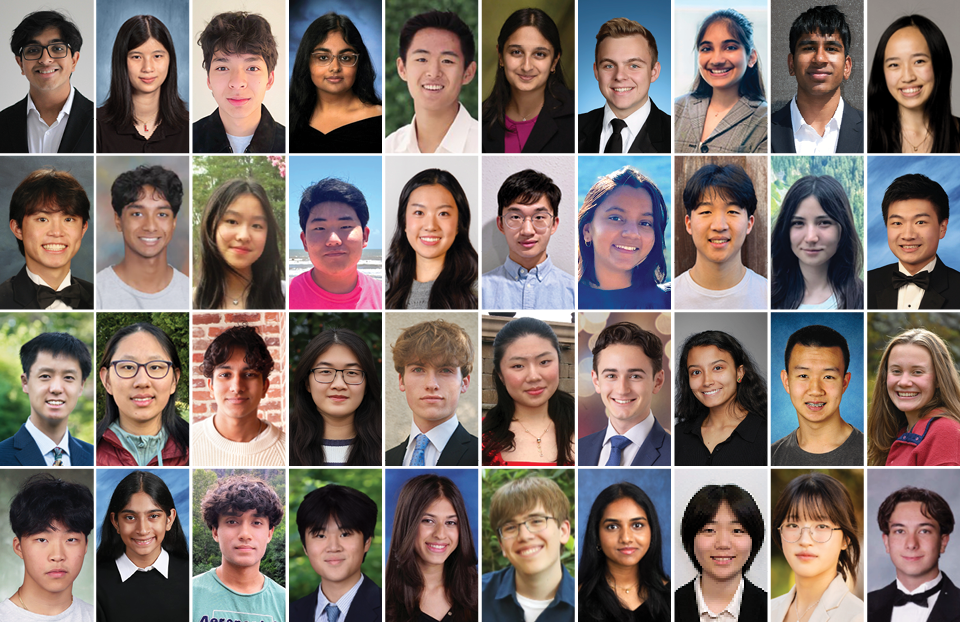
Regeneron Science Talent Search 2026 Finalists
Rohan Arni

School: High Technology High School, Lincroft, NJ
Project Title: Using Deep Learning for Robust Classification of Fast Radio Bursts
Rohan Arni, 17, of Morganville, developed a machine-learning model to analyze fast radio bursts (FRBs) for his Regeneron Science Talent Search space science project. FRBs are mysterious cosmic flashes of radio waves that last milliseconds, and sometimes repeat. In his project, Rohan used data from the Canadian Hydrogen Intensity Mapping Experiment, a radio telescope that maps the sky for FRBs. His model classified repeating and non-repeating FRBs with 98% accuracy. It also identified hidden properties in the data, which Rohan analyzed to conclude that repeating FRBs tend to be closer to Earth and have smaller frequency ranges. This suggests that repeaters and non-repeaters come from different places in the universe. Presently, scientists don’t know much about FRBs and where they come from. Information from Rohan’s project could provide a tool to interpret new and available data, helping astronomers learn more about FRBs and their origins. The child of Sunitha and Raghvender Arni, Rohan attends High Technology High School (Lincroft). He worked with researchers at Harvard University on developing NeuroDiffEq, a library for physics-informed neural networks used by researchers worldwide.
Rachel Chen
School: Marlborough School, Los Angeles, CA
Project Title: The Dual Canonical Basis in the Spin Representation via the Temperley-Lieb Algebra
Rachel Chen, 18, of Los Angeles, developed a concrete, visual way to describe quantum physics systems for her Regeneron Science Talent Search mathematics project. Since quantum particles interact with their environment in complex ways, it is hard to describe these systems mathematically. A 1997 paper showed that part of the quantum system could be described using simple point-and-curve graphics called Temperley-Lieb diagrams. Researchers across mathematics and physics use these diagrams as an intuitive tool for understanding phase transitions, mathematical knots and other concepts. Rachel expanded on the 1997 work, using Temperley-Lieb diagrams to describe how an entire system of quantum particles acts under the influence of a magnetic field. This may be useful as an intuitive framework for researchers to understand the structure and connections among different quantum-mechanical states. She also used her results to understand alternative ways of working with the quantum system. The child of Zhaoxu Chen and Jing Che, Rachel attends Marlborough School, where she plays volleyball and founded the math club. She is also an internationally ranked chess player and knows the words to over 200 Taylor Swift songs.
Linus Chen-Plotkin

School: Germantown Friends School, Philadelphia, PA
Project Title: Predictability and Statistical Memory in Classical Sonatas and Quartets
Linus Chen-Plotkin, 18, of Philadelphia, used statistical tools to analyze classical music for his Regeneron Science Talent Search behavioral sciences project. He created three statistical tests to measure a melody’s “memory” — how much later notes depend on those that come before. Long memory means earlier notes continue to influence later ones; short memory means the melody moves quickly to new ideas. Linus applied his tests to over 600 piano sonatas and string quartets by Haydn, Mozart, Beethoven and Schubert. Across all tests, Mozart’s music stood out, with shorter memories and less predictable melodies. Linus showed that composers differ in how they balance repetition and novelty, an aspect of musical personality. He believes his approach and other quantitative methods can help improve the understanding of areas that are typically studied qualitatively, such as the humanities. The child of Joshua Plotkin and Alice Chen-Plotkin, Linus attends Germantown Friends School, where he is a varsity wrestler and advanced Mandarin student. He also sings and plays blues guitar at a bourbon bar called The Twisted Tail and was formerly a member of the Philadelphia Boys Choir & Chorale.
Ryka Chopra
School: Mission San Jose High School, Fremont, CA
Project Title: Designing Incentive-Compatible Cooperation for the Global Commons: A Reinforcement Learning-Integrated Mechanism Design Framework for Arctic Conservation
Ryka Chopra, 17, of Fremont, developed a math model to explore how nations’ conservation decisions change Arctic ice for her Regeneron Science Talent Search social sciences project. CryoSat-2 data show Arctic ice thickness declining by 12.5% per decade, contributing 0.43°C to global warming. Existing models quantify ice melt but treat human actions as external. Ryka used a two-graph model to show nations’ actions and environmental impacts and link them together. She simulated nations’ potential actions using game theory. She included reinforcement learning to let them iterate on their conservation strategies for the best economic payoffs. Ryka’s simulations covered interactions among 25 Arctic-related nations and regions over many time periods. Her model showed that, with the right incentives, countries can work together to reduce ice loss. The child of Rajesh and Suparna Chopra, Ryka attends Mission San Jose High School, where she is president of the history club. Ryka is also a pianist and music composer at the San Francisco Conservatory of Music’s Pre-College division, where she serves as student council secretary and as photographer and designer for the yearbook editorial team.
Colin Jie Chu
School: The Nueva School, San Mateo, CA
Project Title: Frequency-Based Parameterization of Semi-Empirical Models for State-of-Health Estimation in Lithium-Ion Batteries in Electric Vehicles
Colin Jie Chu, 18, of Palo Alto, developed a way to predict the health and lifespan of electric vehicle (EV) batteries for his Regeneron Science Talent Search physics project. Batteries used in EVs degrade over time and pose a risk to the environment and safety while driving. However, it has been hard to predict a battery’s health in real-world driving conditions. For his project, Colin assessed data from 22 batteries that were deliberately aged over time using electrical signals, mimicking vehicle driving behavior, to evaluate how well electricity moved through them. Using these responses, he developed a model to predict the battery’s state-of-health, using equivalent circuit models and machine learning techniques. His model accurately predicted a battery’s state of health with an error margin of 2.36%. Understanding a battery’s health could improve EV battery safety, lifespan and maintenance costs. The child of Shelley Chu, Colin attends The Nueva School (San Mateo), where he is co-captain of the physics research team and president of the environmental engineering club. He is also the co-founder and president of Homeless Heroes, a nonprofit focused on food recovery and food insecurity. Colin plays in the Stanford Water Polo Club. He has visited almost every U.S. national park.
Mason Corey
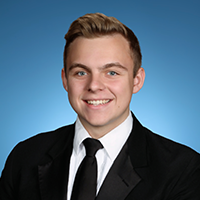
School: Kingsway Regional High School, Swedesboro, NJ
Project Title: AI-Powered Thermal Fingerprinting: Predicting PLA Tensile Strength Through Schlieren Imaging
Mason Corey, 17, of Swedesboro, created a way to predict the tensile strength of 3D-printed parts for his Regeneron Science Talent Search materials science project. Existing tools use factors like print speed, nozzle temperature and thickness of layers to predict the robustness of 3D printed parts, but they don’t consider the surroundings. Also, this testing usually destroys the item or requires expensive inspections. In his project, Mason used an imaging technique called background-oriented schlieren, which captures the temperature gradient around the printed object. He used AI to analyze the thermal images and predict the tensile strength of the objects. Mason analyzed 30 specimens in six different environmental conditions. In his small dataset, Mason saw that the thermal environment seemed to affect the part’s mechanical properties. His method could lead to more reliable 3D printing, less material waste and reduced costs. The child of Megan and Michael Corey, Mason attends Kingsway Regional High School, where he founded a summer physics workshop. Mason is a co-founder of SJ Youth Arts, a nonprofit supporting young artists. He brings engineering into theater, designing modular sets and interactive props.
Jashvi Desai
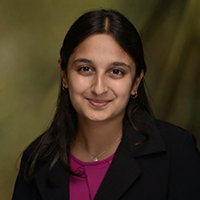
School: Yorktown High School, Yorktown Heights, NY
Project Title: Neuroinflammatory Signatures and Compensatory Prefrontal Mechanisms in Long COVID-19: Insights From 7T MRI and Cognitive Modeling
Jashvi Desai, 18, of Yorktown Heights, studied how the brain is different in people with long COVID for her Regeneron Science Talent Search medicine and health project. Many people with long COVID have cognitive symptoms, like brain fog, and research is still unraveling why. To better understand this phenomenon, Jashvi developed computer scripts and algorithms to analyze brain scans and memory tests. She found that people with long COVID had smaller memory-related brain regions and thicker outer layers in other areas of the brain. This could be a sign of inflammation. In another analysis, she found that the thickness of the prefrontal cortex, the brain’s control center, was correlated with the ability to remember words in people with long COVID. Learning about changes in the brain during long COVID could lead to better treatments. The child of Hina Desai and Nirmit Desai, Jashvi attends Yorktown High School, where she is the president and founder of its MEDLIFE chapter. Jashvi is a volunteer in the Yorktown Volunteer Ambulance Corps and is completing her EMT certification, having logged over 250 hours in ambulance ride-alongs. She enjoys hiking and swimming, acting as a junior coach for the local summer swim team.
Mythreya Dharani
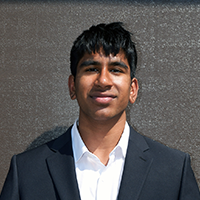
School: Bergen County Academies, Hackensack, NJ
Project Title: I2-CISSP: An Interpretable Machine Learning Framework for Robust and Practical Prediction of Cisplatin Response in Human Tumors
Mythreya Dharani, 18, of Paramus, created an AI model to predict how well a type of chemotherapy will work against specific tumors for his Regeneron Science Talent Search computational biology and bioinformatics project. AI can analyze large genetic datasets to estimate treatment effectiveness, but doctors hesitate to use these models because it’s unclear how they reach their conclusions. For his project, Mythreya built I2-CISSP, which uses machine learning to predict how tumors will respond to cisplatin, a common chemotherapy. I2-CISSP analyzes data from two sources: genes from a patient’s tumor and published data from cancer cells already tested with cisplatin. The model was more accurate than several existing prediction methods and gave insight into its calculations, including which genes mattered most. Mythreya believes I2-CISSP offers doctors a more transparent way to tailor cancer care and help predict outcomes. It could be expanded to other chemotherapies. The child of Anuradha Rammdass and Dharani Ajithdoss, Mythreya attends Bergen County Academies (Hackensack), where he co-leads the math team and plays varsity volleyball. He also co-founded and runs CerealCodes, a free global programming contest for high schoolers.
Jonathan Du
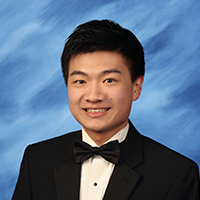
School: Los Altos High School, Los Altos, CA
Project Title: An Unrestricted Notion of the Finite Factorization Property
Jonathan Du, 18, of Mountain View, explored how factorization works in different mathematical spaces for a Regeneron Science Talent Search mathematics project. Factorization is breaking numbers, polynomials or other mathematical objects into a product of simpler parts: factors. Factorization has enthralled mathematicians since antiquity, and it now underpins the encryption of most information on the internet. Jonathan’s project investigated a new idea called the unrestricted finite factorization property and showed how it relates to other types of factorization. Whole numbers have the simplest factorizations, with a specific set of factors associated with each number. But in more complicated algebraic systems, some elements have several factorizations while others may not factor at all. Jonathan’s project studies systems in which the elements that do factor only do so in a limited number of ways. This work could help mathematicians understand how strange multiplication can get. The child of Zilin Du and Mingyi Xia, Jonathan attends Los Altos High School and is president of the math, physics and hacker clubs. Jonathan also spent years developing and delivering solar vaccine refrigerators to places where electricity is unreliable.
Leanne Fan
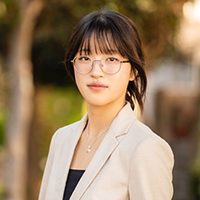
School: Westview School, San Diego, CA
Project Title: Photobiomodulation on In Vivo and In Vitro Wound Models Under Simulated Microgravity for Future Space Travel
Leanne Fan, 18, of San Diego, studied how to better heal wounds in microgravity for her Regeneron Science Talent Search medicine and health project. Wounds heal slowly in space due to the absence of mechanical loading, or gravity’s pull on tissues. For her project, Leanne built a continuously rotating device to simulate microgravity. The device rotates along two axes, preventing gravity from acting on the wound sample in just one direction. Leanne then treated injured flatworms in this simulated microgravity with 660-nanometer red light. She saw that treatment sped up tissue regeneration by 95.2%. She then tested red light in wound models using human cells and found that it sped up cell migration during wound closure by 29.4% in normal gravity conditions. Leanne’s work could lead to new ways to treat injuries in space, as well as in remote places, during natural disasters, or in other situations with limited access to care. The child of Vivian Wang and David Fan, Leanne attends Westview High School, where she is editor-in-chief of the school’s newspaper. She was a U.S. youth delegate at COP29, the 2024 United Nations climate conference in Azerbaijan, and served as the elected student board member for her school district.
Connor Hill
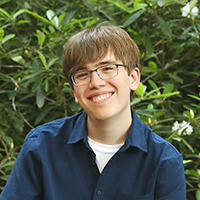
School: Delta High School, State College, PA
Project Title: The Complete Set of Noble Polyhedra
Connor Hill, 17, of Port Matilda, created a full list of the mathematical shapes called “noble polyhedra” for his Regeneron Science Talent Search mathematics project. A polyhedron is a shape with flat sides and straight edges, such as a cube or a pyramid. In a noble polyhedron, all the faces are the same shape, and the angles at each corner are the same. By 2020, mathematicians knew of two infinite families of noble polyhedra and 61 isolated examples. However, they thought there were probably more noble polyhedra out there. In his project, Connor wrote a computer program to work through all the conceivable ways to build a noble polyhedron. He concluded that in addition to the two known infinite families, there are 146 noble polyhedra. Connor hopes that his program can be used to find other shapes, such as those made by interconnecting multiple polyhedra. The child of Nikki and Brian Hill, Connor attends Delta High School (State College), where he leads the school news committee and anchors the community-based segment Survey News. He is also a nature enthusiast who has particularly enjoyed summer trips to Costa Rica and to California’s redwood forests. He volunteers at Shaver’s Creek Environmental Center’s summer camp.
Claire Jiang
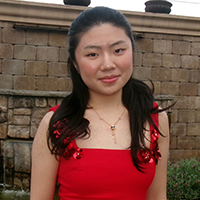
School: Bergen County Academies, Hackensack, NJ
Project Title: A Novel In Vitro Cell Culture Model for Juvenile Idiopathic Arthritis
Claire Jiang, 18, of Wyckoff, developed a cellular model of juvenile idiopathic arthritis (JIA) for her Regeneron Science Talent Search medicine and health project. JIA is a chronic disease in children that causes joint pain and damage, but is not well understood. Claire, who was diagnosed with JIA in third grade, aimed to build a model of fibroblast-like synoviocytes (FLS). FLS cells in the joints are affected by JIA, so a model to study them in the lab could help scientists learn about the disease. After reviewing past research, Claire chose SW982, a cell line used to study rheumatoid arthritis. She treated SW982 cells with bone morphogenetic protein 4 (BMP4), a protein linked to JIA-related joint damage. She found that cells treated with BMP4 behaved like JIA FLS in their growth patterns and gene expression. She believes this model can help researchers better study JIA and find new treatments. The child of Li Li and Hang Jiang, Claire attends Bergen County Academies (Hackensack), where she is head delegate of the Model United Nations club’s travel team and has earned multiple outstanding delegate awards. Claire is also an award-winning pianist and an intern at the pediatric intensive care unit at Joseph M. Sanzari Children’s Hospital.
Edward Kang
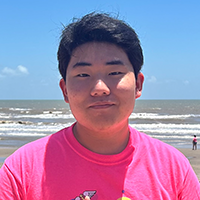
School: Bergen County Academies, Hackensack, NJ
Project Title: RetinaMind: Convergent In Silico and In Vitro Evidence for the Retina as a Novel Biomarker in the Early Diagnosis of Neurodevelopmental Disorders
Edward Kang, 17, of Hackensack, developed AI models to screen for neurodevelopmental disorders using images of the eye for his Regeneron Science Talent Search neuroscience project. Getting a diagnosis for autism or attention-deficit/hyperactivity disorder can take months or years. Because the eye and brain develop from the same tissues, previous studies have shown that these conditions are linked to differences in the retina, the light-sensing tissue at the back of the eye. In his project, Edward used retinal images from a large public dataset to train AI models to find these differences. He improved the models by combining several approaches and studying what influenced their predictions. He tested the models as a screening tool and built a prototype, called RetinaMind, to show how it might work. He also created a retinal cell model to study gene changes that may help explain the differences and validated his results in a second cell model. The child of Eun Young Shim and Sanghyeon Kang, Edward attends Bergen County Academies, where he is a member of his class council and is the safety co-chair and judge for his middle school science fair. He is a baritone in the New Jersey All-State Mixed Chorus and has performed at Carnegie Hall.
Khushi Karthikeyan
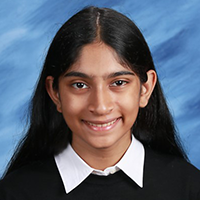
School: Ardsley High School, Ardsley, NY
Project Title: The Supermassive Problem: Probing Potential Stellar Formation Pathways of Intermediate-Mass Black Holes
Khushi Karthikeyan, 18, of Ardsley, utilized a series of detailed black hole simulations for their Regeneron Science Talent Search space science project. Supermassive black holes, like the one at the center of our galaxy, are the easiest for scientists to find because they emit so much radiation. But these detectable black holes all grew from the more mysterious intermediate-mass black holes (IMBHs), which are harder to study but no less important. For their project, Khushi found a potential source for IMBHs in a class of massive, ancient stars with unusually low amounts of metals, which could allow them to form black holes of especially large sizes. Using open-source space simulation software, Khushi tested their hypothesis in a series of virtual experiments. The results suggest that huge, metal-poor stars could explain the current sizes of some supermassive black holes that we can observe. This concept offers a possible origin for our own galaxy. The child of Hrishi Karthikeyan and Kapila Juthani, Khushi attends Ardsley High School, where they enjoyed Latin class so much that they serve as president of the Dead Language Society club. Khushi is also a varsity fencer.
Jaeho Lee
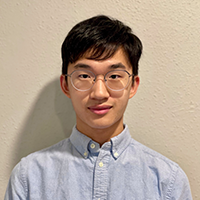
School: Spring Branch Academic Institute, Houston, TX
Project Title: Affine Group of Integers Modulo n, Conjugacy Classes and Representations
Jaeho Lee, 18, of Houston, studied a collection of rules, called permutations, that shuffle around elements of a set of numbers, for his Regeneron Science Talent Search mathematics project. He focused on a specific class of permutations that use a simple formula of multiplication and addition. These are called the affine permutations. They shuffle collections of numbers where arithmetic works like timekeeping: once the numbers get big enough, they circle back to 0, just as a day restarts after 24 hours. In his project, Jaeho broke down the structure of any set of affine permutations by calculating its underlying building blocks. He hopes his work will extend the applications of affine permutations; simple versions have already helped researchers find networks that are highly connected and study how heat flows around a network. The child of Hyeonjeong Lee and Jinseob Lee, Jaeho attends Spring Branch Academic Institute. He plays both violin and piano and is president of his high school’s symphony orchestra. Every month, he plays classical music for seniors with the Music of Harmony club. As a freshman, Jaeho founded a math club for 4th and 5th graders at a Title I elementary school in Houston. He enjoys creating board games and testing them with his family.
Frances Liang
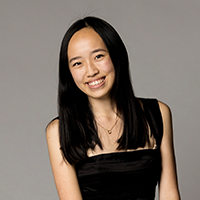
School: The Nueva School, San Mateo, CA
Project Title: PLI-Analyzer: A Novel Platform for Quantitative Assessment of Structural and Biological Accuracy in AI-Predicted Protein-Protein Complexes
Frances Liang, 17, of Los Altos Hills, developed a tool called PLI-Analyzer to test if AI-predicted protein complexes are actually biologically plausible for her Regeneron Science Talent Search computational biology and bioinformatics project. Since 2020, AI tools have predicted over 200 million protein structures. However, they are less reliable at predicting protein complexes — two or more proteins combining for a specific biological function. The mistakes AI makes about protein complexes are hard to detect. PLI-Analyzer works by comparing predicted complexes with information from existing protein sequence databases. It found that two existing tools, AlphaFold3 and Boltz-2, on average, predicted only about half of protein complexes accurately. Because these complexes govern biological processes, they are critical for understanding disease and developing treatments. Frances made PLI-Analyzer open source and developed a web app for research teams to use. The child of Jun Liang and Jessie Jiang, Frances attends The Nueva School (San Mateo), where she co-leads the school’s Journal club. She also founded ChallengHers, a program that helps girls learn critical thinking, innovation and leadership by applying STEM to address community challenges.
Sophia Liang
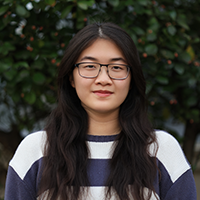
School: Centennial High School, Ellicott City, MD
Project Title: Pharmacologic Soluble Guanylate Cyclase Activation for Suppression of Epithelial-Mesenchymal Transition in Retinal Pigment Epithelial Cells: Implications for Wet Age-Related Macular Degeneration
Sophia Liang, 17, of Ellicott City, studied a potential new treatment for “wet” age-related macular degeneration (AMD) for her Regeneron Science Talent Search medicine and health project. A leading cause of blindness in older adults, AMD causes abnormal blood vessels and scarring in the back of the eye that leads to permanent vision loss. Current treatments do not completely prevent the scarring. In her project, Sophia tested an investigational drug called runcaciguat, which is currently being tested as a treatment for chronic kidney disease and diabetic eye disease. It works by turning down pathways related to scar formation, blood flow and inflammation. Using human eye cells in the lab, Sophia found that runcaciguat blocked signals linked to scar formation. Her work suggests a new treatment approach for AMD. Sophia attends Centennial High School, where she is secretary of its chapter of math honor society Mu Alpha Theta. She is also vice president of her school’s Key Club, leading donation drives and fundraisers. She speaks Mandarin and French and is co-president of the French culture club. Sophia also volunteers at a Baltimore thrift store that supports the nearby homeless community.
Ella Lu
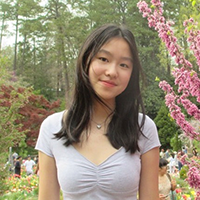
School: North Carolina School of Science and Mathematics, Durham, NC
Project Title: Compositional Analysis of Visual Art Structure
Ella Lu, 17, of Chapel Hill, built a framework that uses AI to analyze visual art for her Regeneron Science Talent Search computer science project. Humans can intuitively understand art, but computers need a rule-based system to evaluate it. Ella developed Compositional Analysis of Visual Art Structure (CANVAS), a system for analyzing how visual elements are arranged within an artwork. One recognized technique, called steelyard composition, balances a large, eye-catching element on one side of an artwork with smaller elements on the other. Ella manually checked pieces in a large public dataset of Impressionist landscape paintings for steelyard composition and other techniques, then used this information to train an AI model. She also used Grounding DINO, an existing AI tool that helps computers recognize objects in images. Together, these helped CANVAS identify steelyard composition in paintings. Ella’s work may help machines understand art the way humans do and support large-scale analysis of art. The child of Jiangang Lu and Shu Lu, Ella attends North Carolina School of Science and Mathematics (Durham). She is editor-in-chief of her school’s literary arts magazine, Blue Mirror, and co-president of the Girls Who Code Club.
Kevin Lu
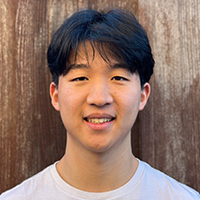
School: Bellarmine College Preparatory School, San Jose, CA
Project Title: AEGIS: Security Sandboxing Meets Mechanistic Interpretability To Defend Against Prompt Injection Attacks
Kevin Lu, 17, of Santa Clara, developed a system to help programmers defend their large language models (LLMs) for his Regeneron Science Talent Search computer science project. Machine learning applications are vulnerable to prompt injection attacks, when a malicious prompt overrides the LLM’s internal rules and can then force the program to surrender sensitive data. Existing defenses against prompt injection are imperfect and often have high computing costs. In his project, Kevin combined traditional cybersecurity techniques with tools to analyze LLMs. Kevin’s shield system, AEGIS, quarantines a suspicious prompt and interprets its threat level before processing it. In tests, 0% of simulated attacks against AEGIS were successful. Tools like Kevin’s could help secure services that incorporate LLMs, like Slack. The son of Shufang Tian and Jun Lu, Kevin attends Bellarmine College Preparatory School (San Jose). As president of the Student Machine Learning Coalition, an international student-run educational collective, Kevin writes and teaches machine learning courses. A nationally ranked debater, Kevin captains his school’s team. His top speaking speed is 350 words per minute.
Frank Lucci
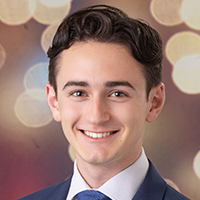
School: BASIS San Antonio Shavano Campus, Castle Hills, TX
Project Title: SubArc: An Inexpensive, High Resolution, Open Source, Absolute Magnetic Rotary Encoder
Frank Lucci, 18, of San Antonio, developed SubArc, a low-cost sensor that helps robots move accurately and precisely, for his Regeneron Science Talent Search engineering project. Frank’s sensor, a high-resolution rotary encoder, converts mechanical motion into digital signals to monitor movement. These sensors typically cost hundreds to thousands of dollars, making them inaccessible to independent researchers and low-budget programs. In his project, Frank designed an open-source, customizable sensor that uses magnets to measure rotation very precisely, so it works reliably even in dusty conditions. He developed a new way to process the signal that allows the sensor to be made with cheaper parts and simpler manufacturing. His creation matched the high-resolution of the more expensive options. Instead of first building a high-resolution prototype, he designed smaller versions that could be scaled up. Frank’s unit costs less than $25, almost 20 times cheaper than existing products. Frank’s work may lower the cost barrier to high-precision robotics. The child of Alison Beshur and Frank Lucci, Frank attends BASIS San Antonio Shavano, where he founded the aerospace club and is a founding member of his robotics team. He is also a cross-country runner.
Finnegan McGill
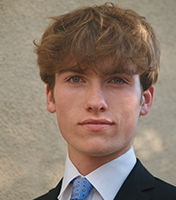
School: Tanque Verde High School, Tucson, AZ
Project Title: A-BiRD: An Automated Bird Recognition Device for Acoustic Monitoring and Conservation
Finnegan McGill, 18, of Tucson, spent more than four years developing his automated bird recognition device for acoustic monitoring and conservation (A-BiRD) for his Regeneron Science Talent Search animal sciences project. Rapidly disappearing bird populations threaten entire ecosystems. Current monitoring is limited by observer bias, difficulties in identifying the species and location of birds and uneven coverage over areas, seasons and times of day. Finnegan’s A-BiRD uses open-source code from Cornell University to identify bird species from their sounds and a custom algorithm to estimate bird locations based on sound arrival times. Finnegan deployed two A-BiRD devices to collect information on bird populations in Tucson during fall migration. Open-source tools handled and visualized the data. He showed that A-BiRD provided detailed information about how birds use habitats and may be helpful to understand how populations are changing. Similar devices could help scientists study other sound-producing animals. The child of Miriam and Christopher McGill, Finnegan attends Tanque Verde High School, where he is student body president, homecoming king and captain of the cross country team.
Natalie Muro
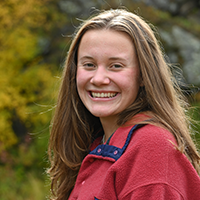
School: William J. Palmer High School, Colorado Springs, CO
Project Title: A Novel Field-Based Approach to Reducing Harmful Algal Blooms in Freshwater Ecosystems
Natalie Muro, 18, of Colorado Springs, developed an eco-friendly way to mitigate harmful algal blooms for her Regeneron Science Talent Search environmental science project. These rapid overgrowths of cyanobacteria, also called blue-green algae, can produce toxins that sicken humans and animals and impede water treatment. For her project, Natalie designed a device that used wind-driven waves to disperse 3% hydrogen peroxide, which is safe for the environment but kills cyanobacteria. Mesh bags attached to the device contained biochar — a porous, charcoal-like material — created from a local invasive plant. The biochar collected the dead bacteria, preventing the cells from fueling future blooms. Natalie tested the method in a reservoir closed due to a harmful algal bloom. Her findings showed that, after treatment, the reservoir water had fewer cyanobacteria. Her work points to a potential low-cost and sustainable method to treat algal blooms worldwide. Natalie, the daughter of Sarah and Tony Muro, attends Palmer High School, where she leads the Science Olympiad team and HOSA – Future Health Professionals chapter. Natalie is an Eagle Scout and Junior Assistant Scoutmaster with Scouting America.
Seth Jacob Nabat
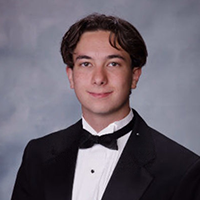
School: William Howard Taft High School, Woodland Hills, CA
Project Title: Learning Broken Symmetries With Approximate Invariance: A Novel Dual-Subnetwork Approach to Classifying Particle Collision Events
Seth Jacob Nabat, 18, of Winnetka, developed a machine learning program to make sense of the results of particle collisions for his Regeneron Science Talent Search physics project. Physicists use computer models to study high-energy particle collisions. When these programs expect symmetrical results, it saves computing time and energy, but can lead to measurement errors being doubled. In his project, Seth designed a three-part system to avoid this confusion. The first network is the one that “knows” about symmetry and uses it to find the quickest way to the approximate results of collisions. The second, unconstrained network catches camera and measurement errors, and the third network finds patterns in those errors. He found that, in tests, his combined model was able to navigate the imperfect data without losing the efficiency advantage. His model lets researchers look directly at what “breaks” symmetry, a fundamental problem in physics, especially quantum field theory. The son of Robyn Brook-Nabat and Scott Nabat, Seth attends William Howard Taft Charter High School (Woodland Hills), where he competes in varsity debate as his team’s co-captain. As a volunteer with the UCLA Math Circle, Seth studies graduate-level math and teaches kids.
Ananya Gulur Nagendra
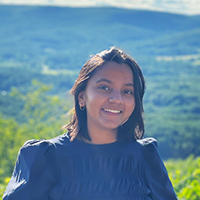
School: Plano East Senior High School, Plano, TX
Project Title: Utilizing Ants To Mitigate MSW Landfill-Generated Methane Production Through Novel Aerobic Digester System for Anthropogenic Food Waste Decomposition
Ananya Gulur Nagendra, 18, of Plano, studied how ant scavenging could decompose human food waste for her Regeneron Science Talent Search animal sciences project. Food waste produces about 58% of methane emissions from landfills, contributing to climate change. To find a sustainable solution to the problem, she began by feeding four ant species food waste to find which broke down the most per ant per day. Camponotus castaneus ate the most waste and had the highest metabolic rate. Ananya created a model to estimate the volume of methane emissions reduced by C. castaneus activity. Finally, she designed a prototype of an ant-based aerobic digester that would cost under $50,000. Her tests found it to be about 83% efficient. Ananya’s work could lead to a viable way to reduce the environmental impact of food waste in landfills. The child of Nalini Rajeswara and Nagendra Gulur, Ananya attends Plano East Senior High School, where she was named singer of the year by the choir department in 2024. Ananya also sings with the Greater Dallas Choral Society for children and youth. After losing her mother to cancer in 2023, she started the nonprofit Letters of Light, whose more than 3,000 volunteers write supportive letters to people with cancer across the country.
Max Hung Nguyen
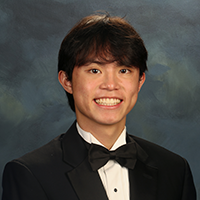
School: Leland High School, San Jose, CA
Project Title: Star2Planet: Decoding and Predicting the Stellar Signatures of Planet Formation
Max Hung Nguyen, 17, of San Jose, studied how the heavy elements in stars influence planet formation for his Regeneron Science Talent Search space science project. Scientists know that a star’s metallicity is a key factor in the formation of gas giants. But it is less clear how strongly it affects rocky planets like Earth. In his project, Max collected data from NASA’s Exoplanet Archive and the Hypatia Catalog and analyzed the metallicity of planetary systems. This type of analysis typically uses iron content as a shortcut for metallicity. But Max created a measure that also included carbon, oxygen, magnesium and silicon to use in his analysis. Including these other elements improved planet formation predictions. He found that giant planets require more element-rich stars, while rocky planets form around many different kinds of stars. As a next step, Max trained an AI model to estimate the heavy elements in a star, as this data is often missing from observations. He could then predict what types of planets the star is most likely to have, helping guide exoplanet searches. The child of Jasmine and Paul Nguyen, Max attends Leland High School, where he co-leads a peer-tutoring program. He volunteers at The Cross Team, an organization serving people without housing.
Rayhan Papar
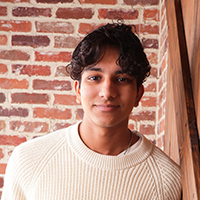
School: The Woodlands College Park High School, Woodlands, TX
Project Title: Sim-to-Real for Autonomous Tumor Resection via Minimally Invasive Robotics
Rayhan Papar, 18, of Spring, developed a framework to help surgical robots learn to remove tumors on their own for his Regeneron Science Talent Search computer science project. Surgical robots can potentially deliver extreme precision and dexterity during surgery, but in clinical settings, they’re still operated by human surgeons. It’s hard to train these robots because each patient’s anatomy is different, and tissues move around and change their size and shape during surgery. They also have to work in a restricted visual field. For his project, Rayhan came up with a method to train robots in a physics-based simulated environment created using medical imaging to reconstruct anatomy. This helped train the robots to make better decisions and also to perform a preoperative check of the surgical plan. The framework was tested on a da Vinci surgical system, which successfully removed whole tumors in three of four gel model tests. The child of Lamiyah and Riyaz Papar, Rayhan attends The Woodlands College Park High School, where he mentors students working on STEM projects. He holds a patent for a surgical aid to help resect brain tumors, and co-founded the nonprofit IdeaCharge, which teaches children about electrical engineering.
Kaya Parikh
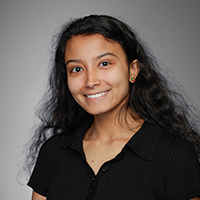
School: Hunter College High School, New York, NY
Project Title: Ozempic® and Counterfeit Ozempic in Novel Triple-Readout Drosophila Model With Type-2 Diabetes and Obesity
Kaya Parikh, 17, of New York, used a fruit fly model to study how semaglutide (sold as Ozempic and Wegovy) and a cheaper alternative affect weight and diabetes for her Regeneron Science Talent Search biochemistry project. Because of the popularity of semaglutide, there’s an unregulated market in “research grade” drugs, such as semaglutide acetate. This compound has not been approved by the Food and Drug Administration and may cause harmful side effects. Weight-loss drugs are mainly tested in mice and rats, but fruit flies can be used to study basic human biology quickly and efficiently. In her project, Kaya fed flies a high-sugar diet to emulate the three major characteristics of diabetes — impaired insulin signaling, internal developmental delay and weight gain. Groups of fruit flies were treated with semaglutide and semaglutide acetate. Kaya found that both drugs helped improve diabetes and reduce weight, but the semaglutide acetate was less successful. The child of Nicole Hindman and Manish Parikh, Kaya attends Hunter College High School, where she leads the DEI council and the math magazine. Kaya also plays the electric guitar in a rock band. Her favorite part of being in a band is the teamwork and creativity.
Siddharth Pasari
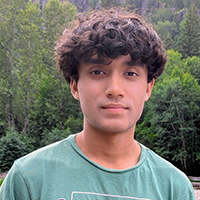
School: Hunter College High School, New York, NY
Project Title: Development of N-glycan Microarrays as Sensors for Glycan Binders
Siddharth Pasari, 17, of New York City, developed a surface that could be used to test for viruses for his Regeneron Science Talent Search biochemistry project. Viruses attach to their host’s cells by binding to sugar molecules called glycans on the cell surface. Different viruses can have distinct glycan-binding proteins that bind to specific sugars. For his project, Siddharth used a light-based printing method called hypersurface photolithography to create a surface covered in glycans that could bind to the viral proteins. He tested his creation with two glycan-binding proteins and found that only one stuck — meaning the surface could distinguish between the two. Surfaces that can bind to proteins on specific viruses could be useful in developing new diagnostic tests. The child of Kirtee Agrawal and Navin Pasari, Siddharth attends Hunter College High School, where he is associate editor of the tech magazine, BITS. Siddharth is also the founder of Math Mastery 4 All, which offers free tutoring for students in under-resourced New York City schools. He was a volunteer at the National Museum of Mathematics, where he gave daily tours. Siddharth enjoys rock climbing, scuba diving, hiking and birdwatching.
Aashritha Penumudi
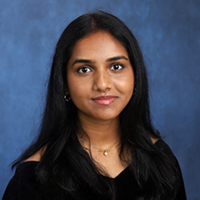
School: Thomas Jefferson High School for Science and Technology, Alexandria, VA
Project Title: A Novel Approach to Understanding the Structural Basis of Ribosome Stalling by AMD1 and Cellular Arresting Peptides
Aashritha Penumudi, 17, of Herndon, studied ribosome stalling, a cellular process linked to cancer, for her Regeneron Science Talent Search biochemistry project. Ribosomes are cellular components that make proteins. When they stall, they slow down, reducing how much of the protein is made. This process regulates polyamines, small molecules that help cells grow but can promote cancer at high levels. Aashritha created stalled ribosomes, then worked with her mentor to image them with an advanced microscope. The images showed that certain amino acids cause ribosome stalling. Aashritha also trained an AI model, using public data from breast cancer cells, to predict which amino acids were linked to ribosome stalling — the results matched her imaging findings. Her research suggests new ways to control polyamines and treat cancer. Aashritha, the child of Anil Perumudi and Saritha Ventrapragada, attends Thomas Jefferson High School for Science and Technology (Alexandria). She leads her school’s Technology Student Association, neuroscience and biology clubs. She also volunteers with the Centreville Immigration Forum and serves as an EMT for the Warrenton Volunteer Fire Company.
Vallabh Ramesh
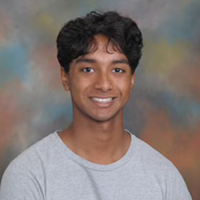
School: duPont Manual Magnet High School, Louisville, KY
Project Title: Next-Gen Smart Materials: Thermo-Responsive and Conductive 3D Printable Polymer Gels for Diverse Applications
Vallabh Ramesh, 18, of Louisville, developed a smart gel that solidifies at body temperature for biomedical applications for his Regeneron Science Talent Search materials science project. Smart materials — which undergo microscopic changes in response to stimuli — are used in medicine today, but they need expensive 3D printers to turn them into complex structures for applications like tissue engineering, drug delivery and soft robotics. Through experimentation, Vallabh discovered the optimal concentration of components to create a gel that could be used in low-cost printers. At first, he 3D printed structures like jaws to demonstrate their application. Then he made smart gel “pouches” that released chemicals over time to demonstrate drug delivery. He also showed how the gel could be used as a heat sink for electronics and as a conductive material that was better than commercial gels. With more testing and research, Vallabh’s gel could help improve personalized medicine. The child of Shoba Hariharan and Ramesh Subramanian, Vallabh attends duPont Manual High School, where he started a club for volunteering at senior care centers that grew into a nonprofit called Cognitive Connections. He also leads the school’s rocketry team.
Ashka Shah
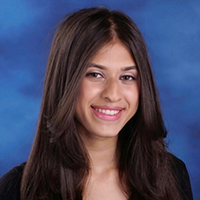
School: Jericho Senior High School, Jericho, NY
Project Title: Selective Dual Inhibition of β-Catenin in Wnt-Driven Cancers via Gid8-Assisted Translocation and a Precision Peptide-Based Gene Therapy
Ashka Shah, 17, of Jericho, developed a targeted way to block Wnt-driven cancer cell growth for her Regeneron Science Talent Search cellular and molecular biology project. The Wnt signaling system normally controls healthy cell growth, but in many cancers, a mutant β-catenin protein drives unchecked growth. In her project, Ashka used fruit fly models, liver cancer cells and protein interaction experiments to understand how a helper protein, Gid8, enables mutant β-catenin to enter the cell nucleus, where it activates cancer-causing genes. By targeting this interaction, she found a small piece of β-catenin that can block harmful signaling while preserving β-catenin’s function in normal cells. Her work points toward more precise strategies for treating Wnt-driven cancers, such as liver and colorectal cancer. The child of Krupa Desai and Hardik Shah, Ashka attends Jericho Senior High School, where she is president of the Medical Minds Club. She founded Makeup for Care, which uses beauty to uplift seniors, and volunteers with an organization that helps arrange food donations for a soup kitchen. Ashka is a two-year varsity fencing captain who placed second in women’s foil at the 2025 Nassau County Individual Championships.
Iris Shen
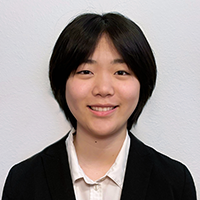
School: The Woodlands College Park High School, Woodlands, TX
Project Title: Assessing Marine Bivalves as Novel Invertebrate Models for Targeting Anti-Apoptotic BCL-2 Family Proteins in Blood Cancer: The In Vivo Effects of Ursolic Acid and Gossypol Acetic Acid on Tumor Cells in Mercenaria mercenaria
Iris Shen, 17, of The Woodlands, studied whether a marine clam with a naturally occurring blood cancer can be used to study human leukemia drugs for her Regeneron Science Talent Search animal sciences project. Animal models of cancer are costly, time-intensive and have ethical implications. In her project, Iris tested how clams respond to a potential cancer drug. She found that in clams, the drug had the same effect it does in human cells: fewer cancer cells stayed alive, tumors had a smaller proportion of cancer cells and the cells’ fat levels changed in similar ways. In a second experiment, Iris tested a mixture of two other compounds in clams. She found that it slowed tumor growth without negative effects on non-tumor cells. Iris’s clam model could help make early drug discovery more cost-effective and ethical. The child of Yu Dong and Dong Shen, Iris attends The Woodlands College Park High School, where she is president of Teach 2 Learn, a nonprofit organization that hosts biweekly STEM workshops at local middle schools. Iris is also an artist. Her art has been auctioned to raise funds for the Houston Livestock Show and Rodeo Educational Fund, and she has painted a portrait for a new elementary school in her district.
Uma Maya Sthanu
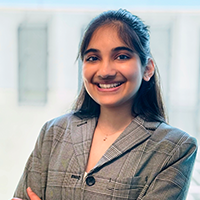
School: Westwood High School, Austin, TX
Project Title: Glia-Neuron GPCR Signaling as a Therapeutic Route to Axon Regeneration: cAMP-PKA Activation Elevates Excitability and Regrowth in Neurons
Uma Maya Sthanu, 17, of Austin, studied a way to regrow damaged nerve cells for her Regeneron Science Talent Search cellular and molecular biology project. Current treatments to restore nerve function after an injury or neurological disease are lacking. In her project, Uma tested whether prostaglandin E2 (PGE2), a molecule released by support cells in nerves, can help with regrowth. She cut cultured nerve cells to mimic damage, then treated them with PGE2. She saw that the treatment improved cell survival, regrowth and readiness to fire electrical signals. Uma also compared her results with data from real-world injured nerve cells and proposed a way for PGE2 to be delivered as a medicine. Her work could offer a potential approach to developing treatments to restore sensation and other nerve functions. The child of Ambuja and Subbu Sthanu, Uma attends Westwood High School. She founded T2L Academy, a free program to help students from underfunded schools enter STEM competitions. T2L has delivered more than 2,000 tutoring hours to over 800 students. Uma also advocates for high school researchers to solve real-world problems through events like conferences and webinars.
Leon Wang
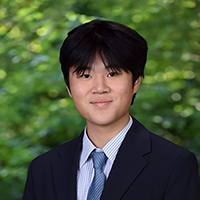
School: King School, Stamford, CT
Project Title: Repurposing Idiopathic Pulmonary Fibrosis Drugs To Treat Vascular Alzheimer’s Dementia: A Safe, Effective and Accessible Approach to Alzheimer’s Treatment
Leon Wang, 17, of Stamford, identified FDA-approved drugs that might be helpful against Alzheimer’s disease for his Regeneron Science Talent Search neuroscience project. First, Leon studied cellular changes associated with a gene variant known as APOE4. APOE4 is the greatest known genetic risk factor for Alzheimer’s, but researchers don’t know why. Using publicly available data, Leon confirmed previous findings that APOE4 carriers had a more active pathway for the signaling protein TGFβ in the cells that line blood vessels in the brain. Leon studied lab-grown versions of those cells and found that higher TGFβ activity damaged them. From prior studies, he identified two FDA-approved drugs known to turn down TGFβ, nintedanib and pirfenidone, treatments for lung scarring. In the cell model, both drugs reduced signs of damage from overactive TGFβ. Repurposing existing drugs is safer and cheaper than creating new ones. These and other drugs targeting TGFβ may one day help treat Alzheimer’s. The child of Xiaowen Wang and Zhen Qian, Leon attends King School, where he is co-captain of both the math and debate teams. Leon also co-founded Weblift, a nonprofit that provides free marketing services to local minority-owned small businesses.
Henry Xie
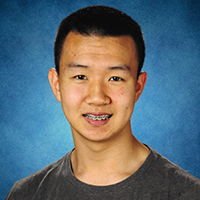
School: Westview High School, Portland, OR
Project Title: Distilling Empathy From Large Language Models
Henry Xie, 17, of Portland, developed a way to transfer empathy from large AI models to smaller models for his Regeneron Science Talent Search computer science project. Large language models (LLMs) can respond to human emotions in caring ways, but require significant computing power. Small language models (SLMs) — used in smartphones and many everyday applications — are faster and cheaper, but often less empathetic. Henry built a two-step model for training SLMs to display more empathy. First, he fed them published examples of empathetic responses from LLMs such as Gemini and ChatGPT, grounded in psychological theory. Then he used targeted prompts to help SLMs distinguish stronger empathetic responses from weaker ones. Henry used LLMs to judge their responses. Compared to untrained SLMs, the trained SLMs were seen as more empathetic in at least 90% of cases. His approach could make empathetic AI more widely available. The child of Fei Xie and Huaiyu Liu, Henry attends Westview High School, where he leads the computer science club and the varsity swim team. Henry is co-founder and president of Youth for Empathetic AI, a nonprofit that unites researchers and students to create AI that benefits all of humanity.
Jerry Xu
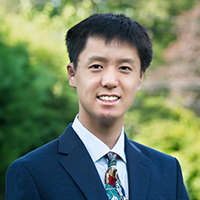
School: Lexington High School, Lexington, MA
Project Title: A Unified Protein Embedding Model With Local and Global Structural Sensitivity
Jerry Xu, 17, of Lexington, developed an AI model to rapidly compare the structures of proteins and amino acids for his Regeneron Science Talent Search computational biology and bioinformatics project. Molecular biologists can learn a lot from a molecule’s structure, but identifying all the parts of that structure — as well as their purposes — is a massive computational task. Current methods either focus on overall structural comparisons, potentially missing key details in protein shape, or are too slow to handle massive databases of molecules. In his project, Jerry found that structural information could be compressed into numerical strings for more efficient comparison without the loss of important features. His model could help biologists to learn about the function of currently unknown parts of proteins. The son of Li Xu and Hao Ding, Jerry attends Lexington High School, where he is captain of both the math team and the science bowl club. Jerry co-founded a summer science lecture series for elementary through high school students, where he gives lessons on biology and math and performs live experiments. He also helps students with programming homework as a teaching assistant for KTBYTE Computer Science Academy.
Jonathan Yan
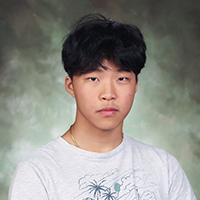
School: Sage Hill School, Newport Beach, CA
Project Title: Bioinformatic Analysis of Metastasis-Associated Metabolic Landscape Reveals an Oncogenic Role for the Transsulfuration Pathway
Jonathan Yan, 18, of Irvine, studied how cancer cells spread to other organs (metastasize) for his Regeneron Science Talent Search computational biology and bioinformatics project. When cancer spreads, it becomes more difficult to treat. In his project, Jonathan built a data integration and analysis workflow to analyze data from 479 human cancer cell lines about how the cells use energy and nutrients and whether these cancer cells spread. He found that cancer cells that metastasize use energy and nutrients differently and that the transsulfuration pathway was highly active in metastatic cancers. This pathway converts one amino acid into another to make antioxidants and protect cells. When he blocked it in cancer cell lines, the cancer cells didn’t spread. Understanding how cancer spreads and how to stop it can lead to more effective treatments. The child of Hua Yan and Mei Kong, Jonathan attends Sage Hill School (Newport Coast), where he plays ice hockey and flute. Jonathan is passionate about cyclist safety. He created an app and hardware that alerts cyclists about dangerous objects like cars approaching from their blind spots. As president of his school’s DreamCatchers Foundation chapter, he helps fulfill end-of-life wishes for hospice patients.
Alyssa Yu
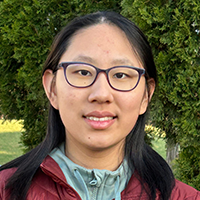
School: Poolesville High School, Poolesville, MD
Project Title: When Epidemics Meet: Understanding Spatiotemporal Interactions of Two Pathogens on Metapopulation Networks via Reaction-Diffusion Dynamics
Alyssa Yu, 17, of Clarksburg, developed a new approach to modeling the spread of two interacting infections for her Regeneron Science Talent Search computational biology and bioinformatics project. Scientists can use computer models to predict hot spots and other features of single-pathogen epidemics, but these models don’t capture what happens when two diseases that impact one another spread at the same time, sometimes called a twindemic. In her project, Alyssa found that she could use strategies from chemical analysis to help her model predict hot spots and identify strategic groups for vaccination. Her findings could help scientists understand co-epidemics like influenza and COVID-19 (flu-rona) or infections that happen alongside HIV. The daughter of Jian Wang and Wei Yu, Alyssa attends Poolesville High School, where she captains the school math team and helps organize an annual tournament for middle-school students. Her math team won fifth place in Theoretical Computer Science at a student-organized mathematics competition. Alyssa has been swimming competitively for ten years and volunteers as an assistant coach for young swimmers with her neighborhood swim team.
Celine Zhang
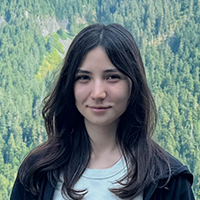
School: Phillips Exeter Academy, Exeter, NH
Project Title: Designing Zero-Knowledge Proofs for Agent Motion Planning
Celine Zhang, 18, of Princeton, New Jersey, developed a way to solve a mathematical problem related to digital and real-life puzzle games for her Regeneron Science Talent Search computer science project. Zero-knowledge proofs are pieces of information that prove someone has important data, like a password, without giving that data away. In her project, Celine found that these proofs can be applied to puzzle games where a moving avatar merges blocks, so that players who solve the puzzle can prove they did so without giving the answer away. Celine’s approach, in which solvers prove their success by offering other players specific but limited advice, could apply to problems in digital security and machine learning, including blockchain authentication. The daughter of Jennifer Hunt and Ning Zhang, Celine attends Phillips Exeter Academy, where she co-heads the engineering club. Celine also co-leads the Junior Computer Programming Club, where she teaches beginner programming to elementary and middle school students near Exeter. Celine also leads the soprano section of the co-ed a cappella singing group PEADQUACS, which performs at school showcases and admissions events as well as for community members.
Audrey Zheng
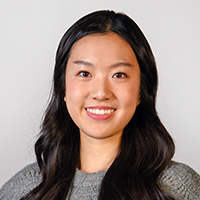
School: North Allegheny Senior High School, Pittsburgh, PA
Project Title: Targeted Isolation of Tumor-Derived Extracellular Vesicles Using a Cocktail of Magnetic Nanospheres for Minimally Invasive Pancreatic Cancer Diagnosis
Audrey Zheng, 17, of Wexford, developed a way to detect pancreatic cancer for her Regeneron Science Talent Search bioengineering project. Pancreatic cancer is asymptomatic in its early stages and is difficult to diagnose early. Most cells regularly release packets of information called vesicles into the blood. In her project, Audrey focused on vesicles as a way to detect pancreatic cancer earlier. She used a set of three antibodies that bind cancer-linked molecules as a way to separate cancer vesicles from normal ones. She then analyzed DNA from these vesicles to identify KRAS mutations, which are common in pancreatic cancer. Her method correctly identified 87% of people who had pancreatic cancer and 87.5% of people who did not have pancreatic cancer. Early diagnosis could lead to better patient outcomes. The child of Ming Ni and Siyang Zheng, Audrey attends North Allegheny Senior High School, where she is the co-president of the math and physics club and a captain of the tennis team. She is the founder and president of The Food Lounge Pittsburgh, where she has organized over 50 events to gather volunteers at food banks and food kitchens. In her spare time she is working on a portable device to detect food allergens.