National Mentoring Month: 10 Regeneron STS 2026 Finalists on how mentors shaped their journeys
January is National Mentoring Month, a time to celebrate the mentors who make a lasting impact on our lives. In science and other STEM-related fields, mentorship is especially vital for helping students navigate complex research questions under the guidance of seasoned principal investigators, gain access to lab resources and ultimately develop into researchers.
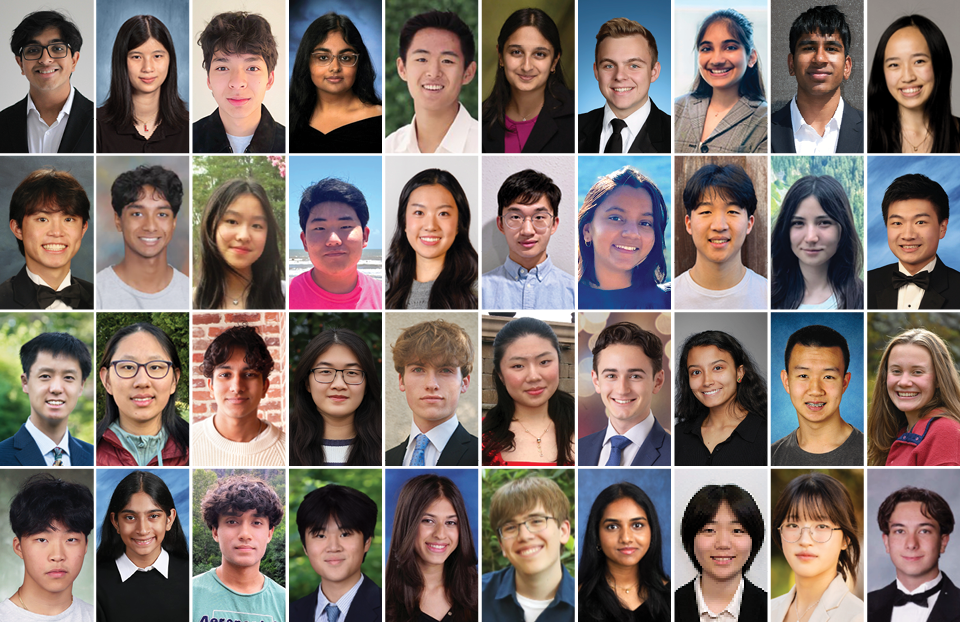
This month, we spoke with 10 of our 2026 Regeneron Science Talent Search finalists about the mentors who guided them through their award-winning projects and helped them deepen their scientific knowledge. These finalists often built mentoring relationships intentionally, seeking out experts who could challenge and support their research. Let’s hear from them below!
Ryka Chopra
Mission San Jose High School (Fremont, California)
After independently developing a mathematical framework to investigate Arctic conservation, Ryka turned to a mentor to help strengthen her project’s relevance to real-world environmental policy. She says, “I met my mentor through a professional introduction by my mother, who is a former colleague. I had developed this project analyzing Arctic conservation as a global commons problem using a mathematical graph-game framework. I had written the first draft and was scheduled to present my project at the Alameda County Science and Engineering Fair (ACSEF). I wanted to strengthen my framework to make it more relevant to environmental policy relevance.”
Jashvi Desai
Yorktown High School (Yorktown Heights, New York)
After identifying gaps in the Long COVID literature, Jashvi Desai proactively connected with researchers whose lab could support advanced neuroimaging analysis. Her mentors guided her through the process, providing access to data and advice on analysis. “I reached out to labs in Westchester and New York City and connected with Dr. Priti Balchandani and Dr. Shams Rashid. They were collecting 7T MRI scans from Long COVID patients, which I was given access to after de-identification and FreeSurfer processing. From there, I wrote scripts to extract data from FreeSurfer and completed the analyses for both Phases I and II.”
Mythreya Dharani, Claire Jiang and Edward Kang
Bergen County Academies (Hackensack, New Jersey)
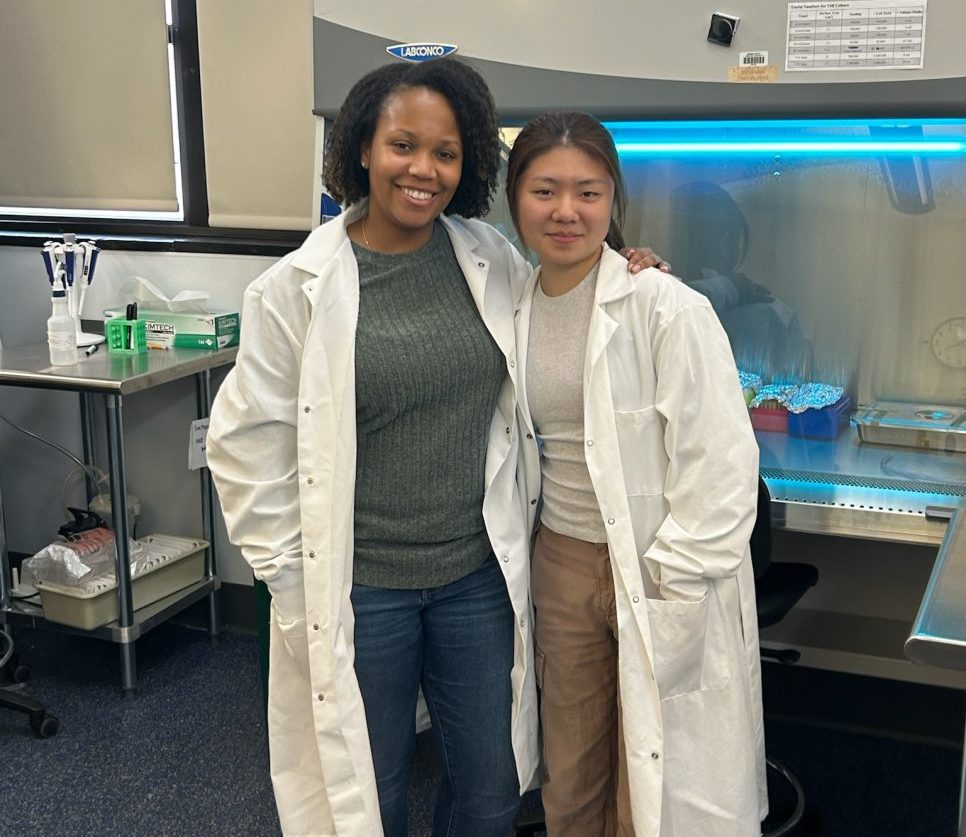
At Bergen County Academies, three of this year’s Regeneron STS finalists built their research projects through the school’s rigorous Experimental Biology and lab programs. Each student independently formulated experiments, developed in-vitro models, and ran analyses while receiving guidance from Dr. German Sabio, Mrs. Donna Leonardi and Dr. Ericka Smith. The mentorship allowed them to tackle complex scientific questions, refine their techniques, and gain confidence as young researchers, preparing them for their award-winning STS projects.
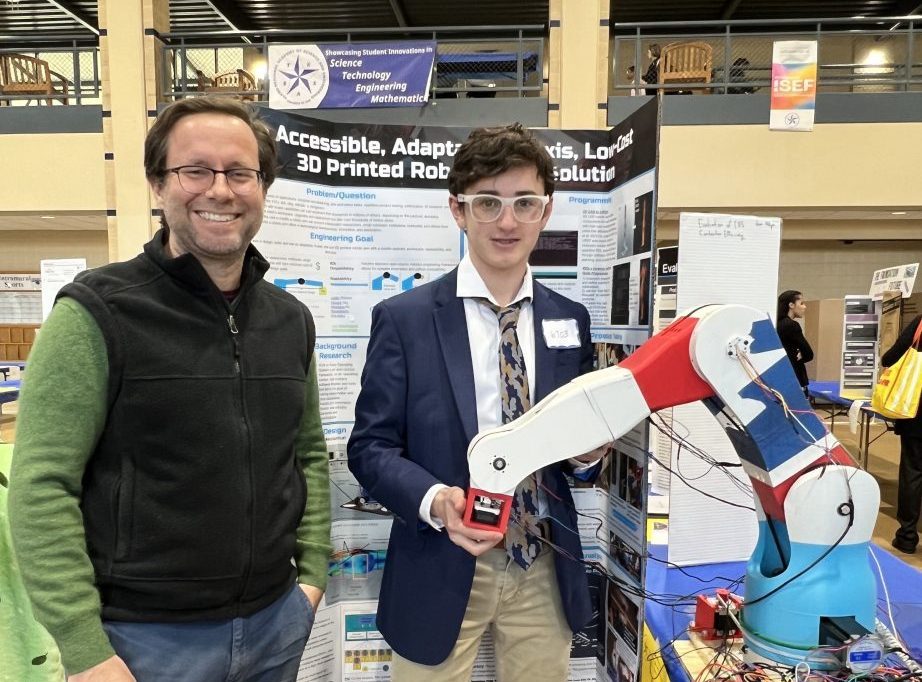
Frank Lucci
BASIS San Antonio Shavano (San Antonio, Texas)
“I met Kris Kozak while volunteering at a museum for the Lunar Caves Analog Test Sites program. I later learned Kris led Hatchbed LLC, a robotics company, and eventually, he became my mentor for my 10th-grade science fair project. For this project, he offered advice on engineering goals based on his experience leading a robotics company using encoders. I conducted the project independently, aside from similar engineering guidance from PlaneWave Instruments and advice on PCB design from the EEVblog Electronics Community Forum.”
Seth Nabat
William Howard Taft Charter High School (Woodland Hills, California)
“In March 2024, I read a paper by Professor Daniel Whitesonon machine learning for particle physics. Fascinated, I reached out to him by cold email about opportunities for a summer internship. I started working in June and was given an unsolved research problem and some background papers. We met one to two times per week over Zoom, usually with the larger group he was advising, mostly postdocs and Ph.D. students. I presented research updates, asked questions, and received invaluable feedback from the group. We also communicated throughout the week by email, especially during the school year.”
Max Nguyen
Leland High School (San Jose, California)
“While reviewing studies on exoplanet formation and the origins of supermassive planets, I identified conflicting results and developed a possible explanation around February 2024. I contacted Dr. Vardan Adibekyan, whose work I frequently cited, and he offered guidance in March 2024. Our interaction was limited, as I worked mostly independently, though his advice during paper submission was very helpful. We submitted our first paper to Astrophysics and Space Science in September 2024 and a second to The Astronomical Journal in August 2025. I have since continued this research, incorporating machine-learning methods to estimate stellar compositions and predict planet formation.”
Kaya Parikh
Hunter College School (New York, New York)
“After researching Dr. Tirtha Das’ work, I reached out to apply for a volunteer research internship in his lab, and he accepted. During my first year, I worked on a cancer project to develop my skills in handling Drosophila and learning relevant procedures.
Later, I proposed a new project on obesity and type 2 diabetes. Given my prior experience, Dr. Das allowed me to lead the project. Because this study was new to the lab, I independently conducted the background research, procedures, and analysis with minimal mentor guidance.”
Aashritha Penumudi
Thomas Jefferson High School for Science and Technology (Alexandria, Virginia)
“After reading Dr. Ahmad Jomaa’s papers, I was interested in exploring ribosome biology and protein biogenesis, which led me to e-mail him regarding my research interests. Upon meeting with Dr. Jomaa and Mr. Emir Maldosevic, I learned more about ribosome stalling, particularly AMD1. My mentors were very involved in helping me understand lab protocols and research standards. They also gave me the independence to collect and design experiments on my own. While the computational component idea was mine, I regularly communicated progress and results to my mentors.”
To learn more about this year’s Regeneron STS finalists, join us on Sunday, March 8, at the Conrad Hotel from 1:30 to 3:30 p.m. for the Public Exhibition of Projects during Regeneron STS Finals Week. More information about the students can be found here.