Scientific Integrity, STEM Outreach
How AI is helping some educators teach science and research
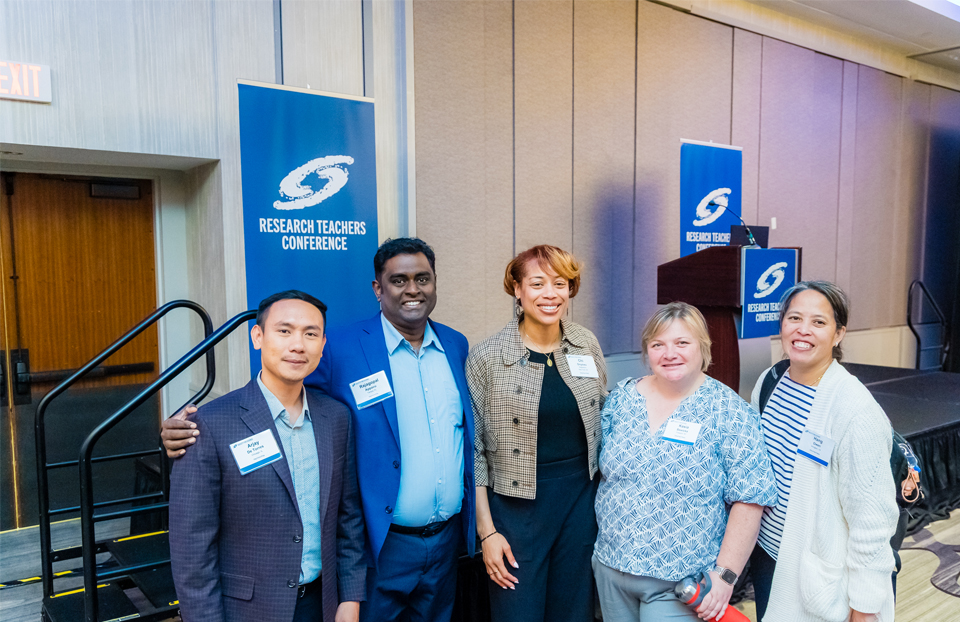
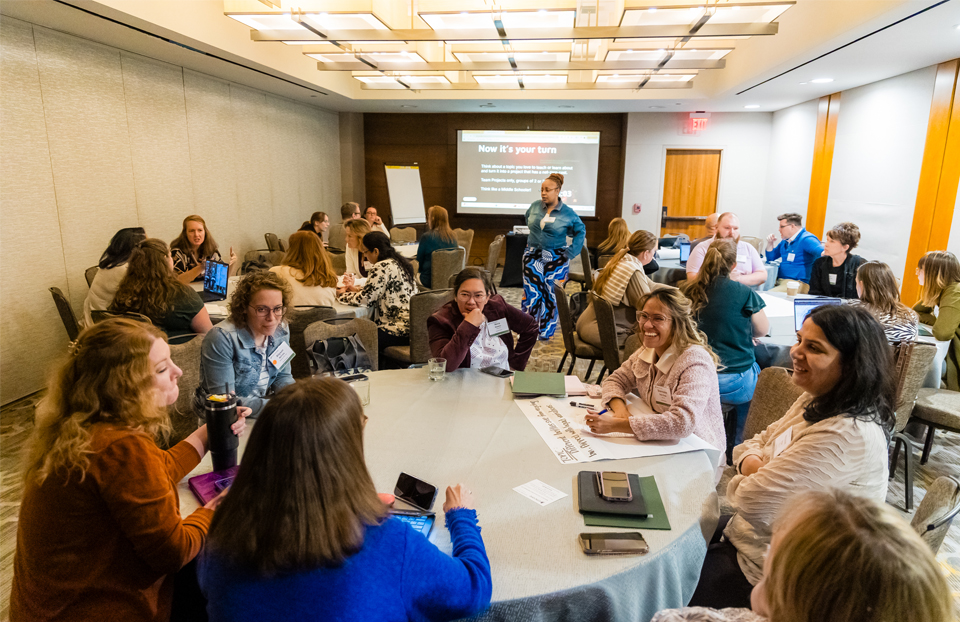
In October, Society for Science hosted a total of 200 educators from across the country at the High School and Middle School Research Teachers Conference in Washington, D.C., bringing them together for an education-filled weekend. Made possible through support from Regeneron and DoD STEM through the Defense STEM Education Consortium, teachers met with their educator peers in breakout sessions covering topics ranging from guiding student passion projects to gaining administrative support for research programs, and even exploring how generative artificial intelligence (AI) can support the research process.
In one focused session, educators Brandon Boswell of Cypress Bay High School in Weston, Fla., and Rojhene Jamero from Desert Pines High School in Las Vegas, Nev., spoke about using AI chatbots such as ChatGPT for research ideation.
“My main message is that you can use AI throughout the entire research process,” Brandon says. “It is like any other tool. You can use it for good or bad, but if used effectively, it can help you at every stage.”
Brandon says student researchers can use AI to learn independently and get additional ideas for their projects. He described a scenario where a student starts by plugging in a topic or question into AI, then asks it to pull key words. The student then uses Google Scholar to find abstracts and asks AI to summarize them. AI could even help the student organize data into tables, allowing them to focus on analysis and interpretation of the research.
He shared the story of a student who turned to AI to sharpen his research questions. He began by asking about the accuracy of nutritional supplement labels, a topic that raises questions about quality control. Using AI, he refined the question and found that certain supplements are more frequently mislabeled than others. This led the student to focus on one in particular: a mushroom called lion’s mane.
“If a student doesn’t really know what they want to investigate, they can start broad. Start with a topic,” Brandon says. “Tell the AI: ‘I want to study CRISPR.’ Start vague, and over time, you can drill down.”
He reminds students that maintaining academic integrity is of utmost importance, and they should not let AI generate their research questions. “I’ve definitely run into this problem with a number of students; we had to revise their research question because, while they were solid, they didn’t come up with them,” Brandon says.
Brandon spoke about the ease of AI but reiterated that students cannot simply copy and paste what large language models (LLMs) give them. “No matter what their class rank, many educators and academics consider simple copying and pasting from AI chatbots as cheating, or academic dishonesty,” Brandon says. He emphasized the importance of teachers modeling appropriate AI use and helping students understand how to leverage these tools responsibly. It’s crucial for students to be transparent about their use of AI in their work. Brandon explained that Microsoft sponsors his district, so he primarily uses Copilot and OpenAI’s ChatGPT.
The discussion about AI carried into a workshop on scientific integrity, where teachers continued to explore practical ways to guide students in using these tools responsibly. They shared strategies for integrating AI into the research process while also ensuring they cite AI appropriately in competition entries.
To learn more about the Society’s Research Teachers Conferences, visit our website under our STEM Outreach Programs and sign up to be notified when the 2026 lottery opens here.