What three leading scientists told the next generation at Regeneron ISEF 2026
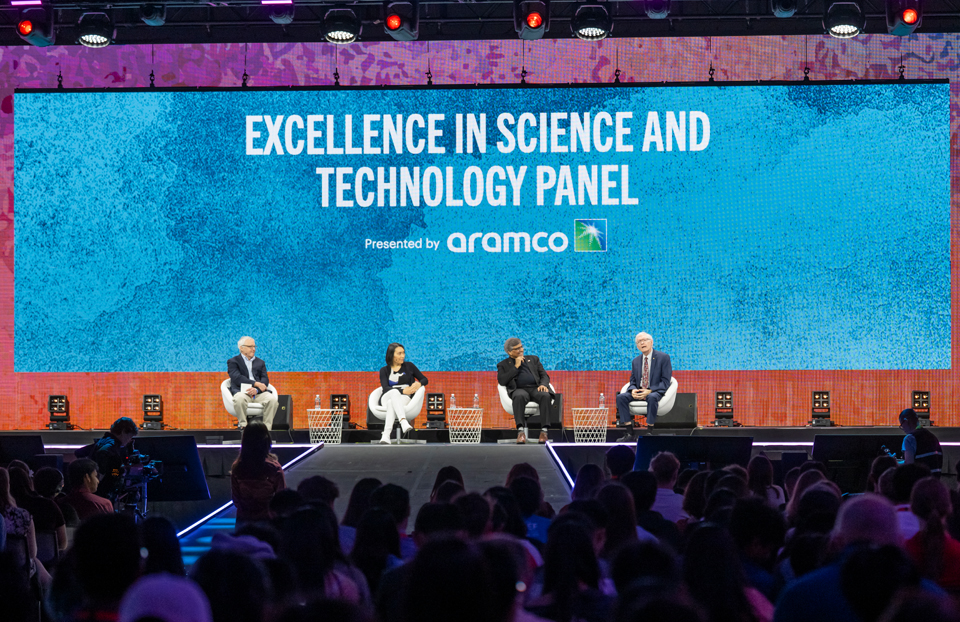
At Regeneron ISEF 2026, the Excellence in Science and Technology Panel, presented by Aramco, brought together three leading scientists and science journalist Joe Palca to discuss the future of scientific research and the promise and risks of AI. The panelists—Sarah Stewart, a MacArthur Fellow and professor at Arizona State University; Sethuraman “Panch” Panchanathan, a professor of technology and innovation at ASU and former director of the U.S. National Science Foundation; and W.E. Moerner, the Harry S. Mosher Professor of Chemistry at Stanford University and recipient of the 2014 Nobel Prize in Chemistry—spoke candidly.
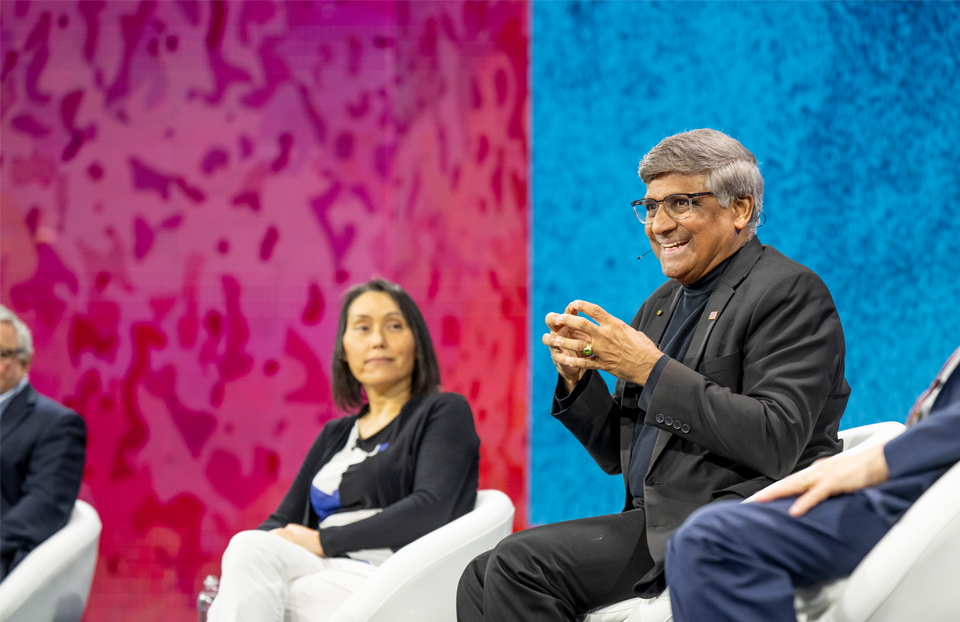
Here is what they wanted the next generation of scientists to know.
When a student from Bradenton, Florida, asked which single breakthrough would most benefit humanity, Panchanathan said no urgent global challenge can be solved by one discipline alone. “Without interdisciplinary approaches, we will not solve the most pressing global grand challenges,” he said. “There is no solution to climate mitigation, adaptation, resilience and climate change without engineers, scientists, social scientists, behavioral scientists, policymakers or economists. There is no limit to the disciplines that have to contribute here.”
Panchanathan’s message to students was clear: the future belongs to those who develop the right mindset, not just the right skills. “Mindsets are even more important than skill sets as you walk the journey into the future,” he said. “The mindset of team spirit. The mindset of welcoming interdisciplinary inspirations. That is how you find real solutions to global grand challenges.”
The panel repeatedly returned to AI, exploring how it is changing science, where it falls short and what risks it presents. Moerner praised AI’s ability to quickly surface past research but also raised concerns: “I’m worried that many people, including me perhaps, will not be thinking as much about what’s going on. You have to test it. You have to make sure it’s correct. There are many things stated in these systems that we know are already incorrect.”
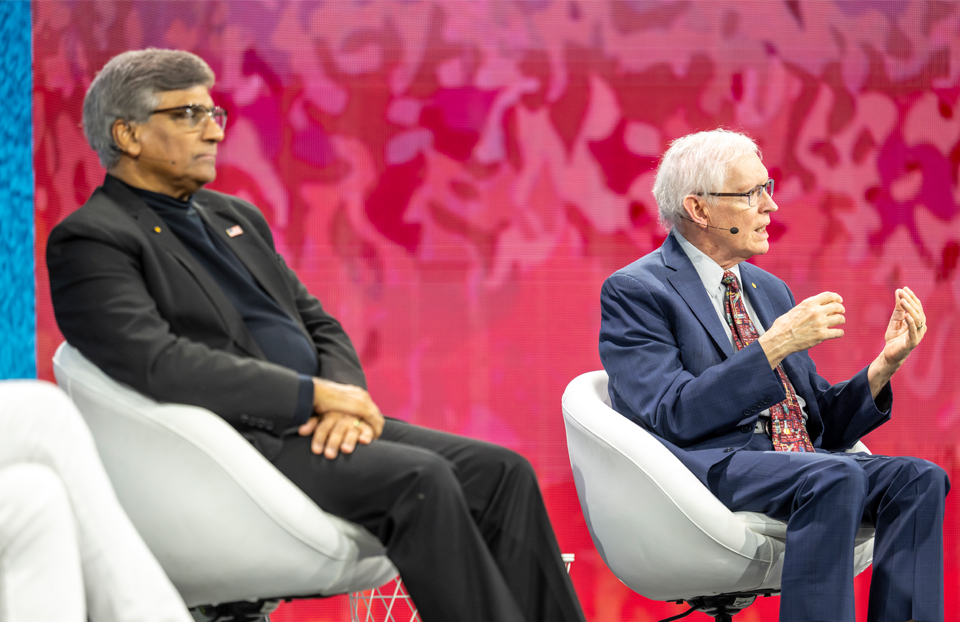
Stewart, who has watched AI tools evolve throughout her research career, expressed both enthusiasm and caution. “AI can be helpful as an assist,” she said. “The negative is when you wander into its use without testing it, and without knowing what specific outcome you want. It is not a general purpose solve-everything.”
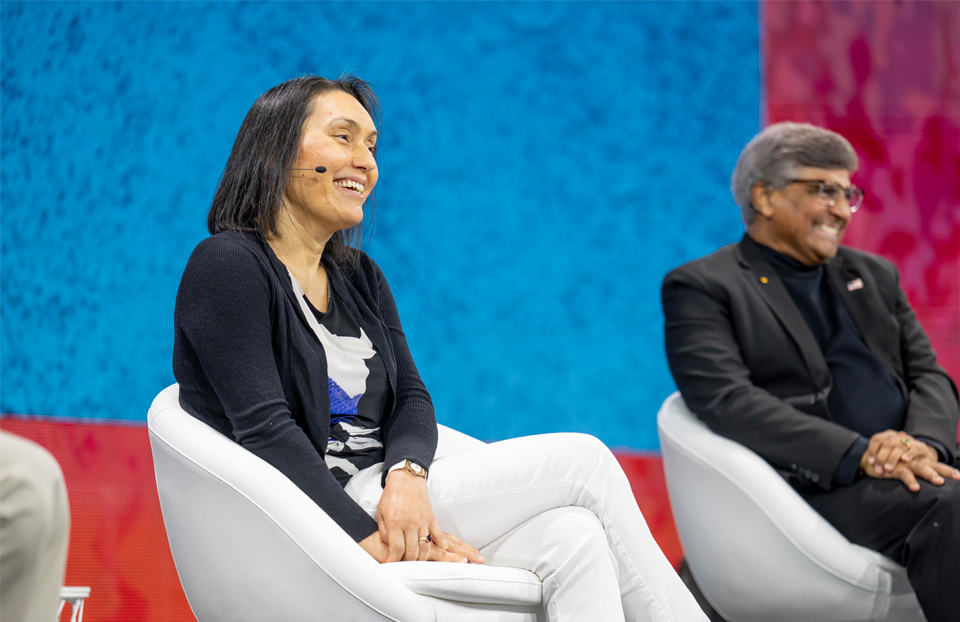
Stewart also considered the deeper questions AI is raising for researchers: “We’re having an identity crisis in science because we were the scientists, and now if AI can do science, who is the scientist?”
Her answer was grounding. “You have to remember why you wanted to do science in the first place. If you don’t think it’s the most fun daily activity, then why are you here? In which case, you’re going to keep doing it even if AI is also doing it.”
Panchanathan drew on his experience developing AI tools for people with disabilities to argue that the technology can help and expand human potential. “AI and machine learning can be a huge asset — an empowerment, an enrichment, an enablement and an unleashing of unbelievable ideas and talent.” But he urged the audience to remember three A’s when navigating AI’s risks: “Acknowledge the negative effects. Address the negative effects in partnership with people you need to work with. Then advance. Oftentimes, what we do is we advance and hope things will get addressed — even without acknowledging the problem.”
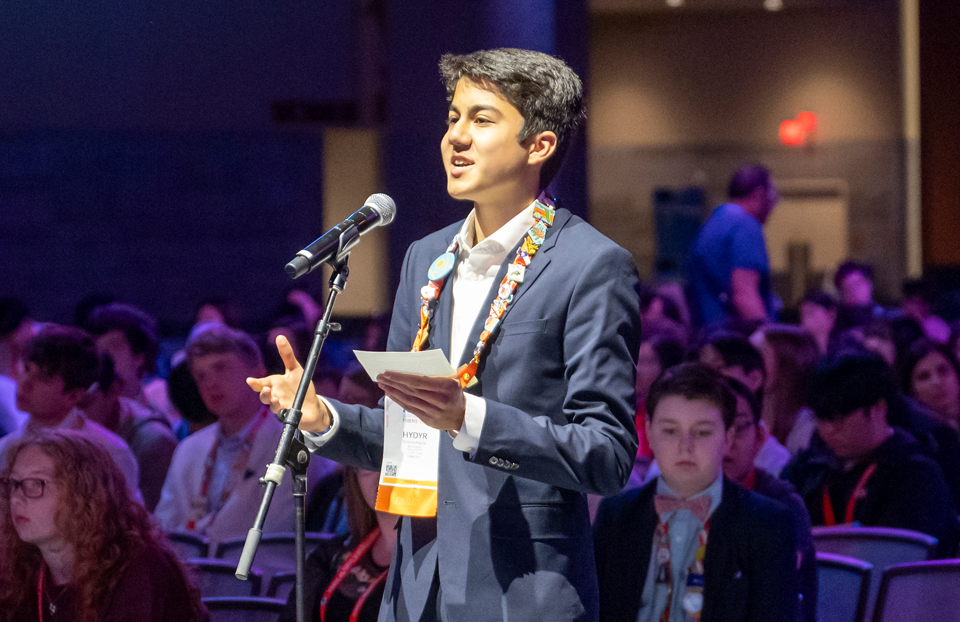
A student from Anchorage, Alaska, said his community is already experiencing the effects of climate change. He asked how scientists can reach people who believe misinformation. “Information is the only way you combat disinformation,” Panchanathan said. “But more importantly, it’s important to contextualize the information for the individual consuming it.” Moerner suggested getting personal: “Connect with the person who’s got the misinformation. Try to learn something about their life. If you connect with facts that relate to their issue — and your personal connection — maybe we’ll have some progress on this horrible problem.”