6 Regeneron STS Finalists Who See Problems and Started Building
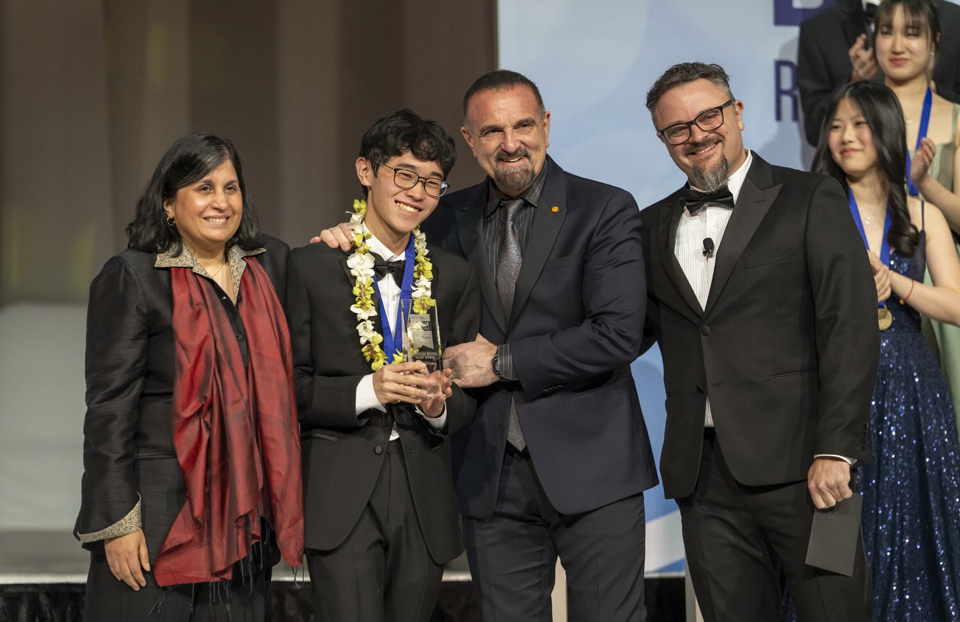
The Regeneron Science Talent Search is most often associated with extraordinary research projects. But each year, we’re also struck by how many of these young people have already founded organizations, launched initiatives or taken on leadership roles in their communities.
In this year’s cohort alone, one student redirects unused school lunches to homeless shelters. Another organizes makeover sessions for women in nursing homes. Others are helping small businesses craft websites, teaching girls to code, supporting hospice patients or organizing efforts to address food insecurity. The impetus behind these efforts is the same one that drives their research: notice a problem, ask questions and build something that helps.
Colin Chu
The Nueva School (San Mateo, California)
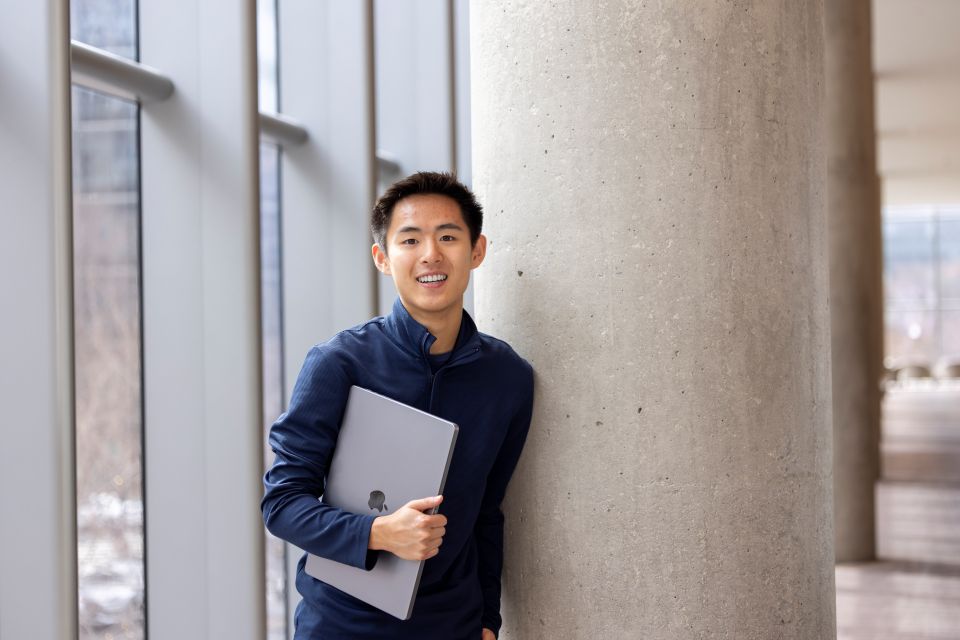
Colin Chu has founded not only one, but three organizations, making an impact in a variety of ways. He launched Homeless Heroes, a nonprofit that redirects unused school lunches to local shelters and food banks, addressing food insecurity and waste. He also founded his school’s Ethics Club to create space for structured discussions on real-world dilemmas. He also established the Sustainable San Mateo County Youth Advisory Council to advance youth-driven environmental initiatives.
“I always enjoy being in the company of others and strive to bring energy to each of the conversations and communities that I’m a part of,” he says.
That focus on practical solutions extends to his research. “Electric vehicles are one of the most transformative alternatives to traditional, gas-powered cars,” Colin explains. His work improves how EV battery health is predicted, helping make clean energy technologies safer and more reliable.
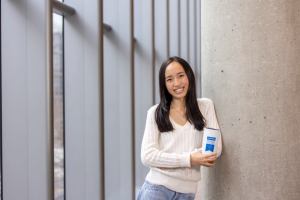
Frances Liang
The Nueva School (San Mateo, California)
“I founded ChallengHers to encourage girls not only to learn STEM skills, but to apply them as tools for addressing challenges within their own communities,” Frances Liang says. Growing up, she was often one of the only girls at coding and science camps. “That experience really shaped how I saw STEM education,” she explains. Competing in the Congressional App Challenge in eighth grade reinforced that perspective. “The challenge emphasized building technology to serve community needs. That approach resonated deeply with me.” She had already started a girls’ coding club at her middle school but wanted to expand her footprint. Through ChallengHers, she now connects students with mentors, resources and role models, including past competition winners who share feedback and guidance.

Ashka Shah
Jericho Senior High School (Jericho, New York)
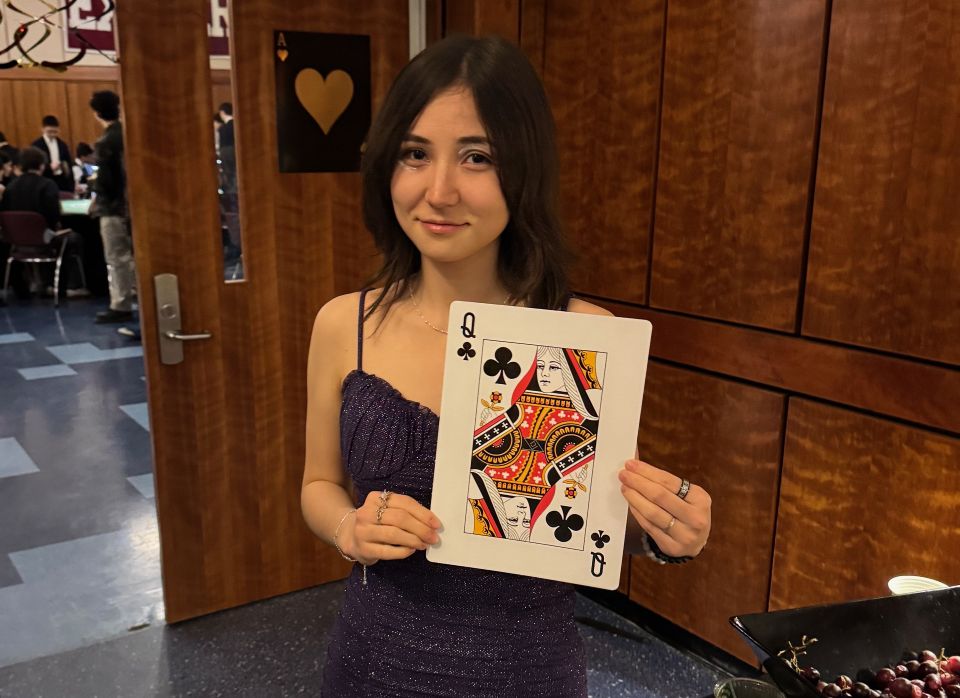
Ashka builds community with the same energy she brings to the lab. Living with her grandparents, she began thinking about older adults who rarely get visitors and decided to do something tangible about it. “I live with my grandparents and am blessed enough to come home every day and play games with them,” she says. “Around my sophomore year, I realized not all the elderly have that.”
She founded Makeup for Care, collecting unused makeup from beauty salons across Long Island and bringing it to nursing homes and memory care facilities for “makeover sessions” with residents. “Combining my love for makeup with my secret passion for recycling, I decided to take initiative,” she says. “This turned into a monthly event at a different facility each time, with numerous volunteers,” she adds. “It is one of my favorite things to do, and I’ve learned so much from the women there.”
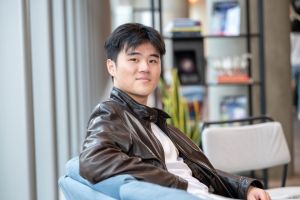
Leon Wang
King School (Stamford, Connecticut)
Leon Wang co-founded Weblift, a nonprofit that builds free websites for small, local businesses. “I was inspired by the stories I heard from the business and community members that I spoke with,” he says. Many lacked the digital presence needed to compete in an increasingly online economy.
Through Weblift, Leon works directly with small business owners to design websites and expand their digital outreach and e-commerce capabilities. “We wanted to make sure that cost wasn’t the reason a business couldn’t grow,” he explains. By offering services for free, Weblift helps entrepreneurs reach new customers and strengthen their visibility in the community.
For Leon, the work is about more than coding. It is about listening. “Helping them expand their business through digital outreach” starts with understanding their goals and challenges. In building Weblift, he is not just creating websites. He is helping local businesses tell their stories.

Jonathan Yan
Sage Hill School (Newport Beach, California)
After being hit by a car while biking on a family trip, Jonathan remembers lying on the pavement thinking, “How can I make biking safer? How can I help cyclists stay aware of their surroundings?” That question became RideSmart. Jonathan developed a computer vision-enabled app that alerts riders to dangerous objects approaching from behind, along with a hardware prototype that delivers vibration warnings through the handlebars. “There is no reliable way to see what’s coming from behind,” he says. “I need to stop this from happening to others.” What began as a frightening accident grew into a funded social entrepreneurship project with workshops and community partnerships.
His empathy extends beyond technology. After visiting his grandmother’s sister in a rural Chinese village, he noticed she had little companionship. He founded a chapter of the DreamCatchers Foundation at his high school to help fulfill end-of-life dreams for hospice patients, bringing comfort and connection to seniors. “My restless mind is a gift that I’ve learned to harness to look out for others,” he says.
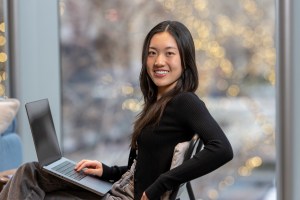
Audrey Zheng
North Allegheny Senior High School (Wexford, Pennsylvania)
Audrey Zheng traces her nonprofit work back to something simple: “I love cooking and trying new foods,” she says. What began as weekends experimenting with new recipes eventually grew into something larger. Wanting to translate that passion into action, she founded the Pittsburgh chapter of Food Lounge, a student-led nonprofit focused on addressing food insecurity in her community.
Through partnerships with the Greater Pittsburgh Community Food Bank, Audrey helps organize food distribution events that allow families to “choose groceries best suited to their dietary needs and preferences.” She also coordinates volunteers to prepare and serve hot meals at community kitchens. One initiative especially meaningful to her involves leading wonton-making nights for seniors at a local living center, where a shared meal becomes more than nourishment. It becomes a way to connect.
To learn more about this year’s incredible finalists and their hard work, join us on Sunday, March 8, at the Conrad Hotel from 1:30 p.m. to 3:30 p.m. for the Public Exhibition of Projects during STS Finals Week. More information about the students can also be found here.