Wileidy Enid Feliciano-Rivera
7th Grade, Escuela Intermedia Rafael Irizarry Rivera
Peñuelas, PR
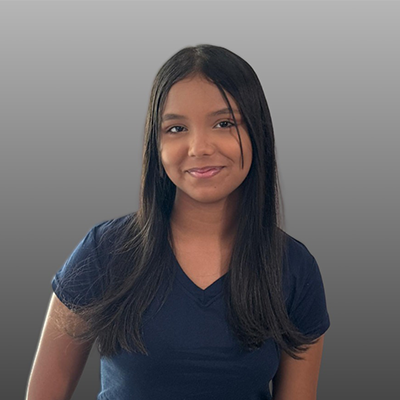
Evaluation of the Effect of EcoMusa: Bioplastic Mulch Based on Musa paradisiaca for Weed Control (Phase II)
Wileidy used plantain peels to make a biodegradable mulch to control weeds. She chopped up peels from the school cafeteria and created bioplastic sheets. She compared her bioplastic to plastic sheeting and uncovered soil. Her mulch reduced weeds as well as plastic mulch and kept soil cool and moist.
View Poster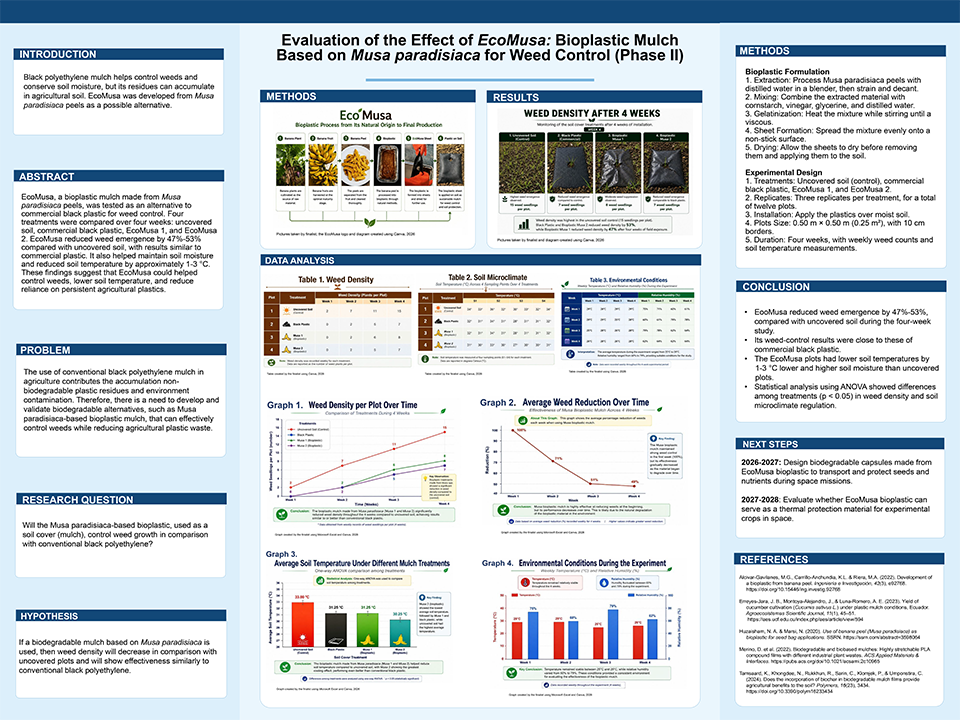
Project Background
Wileidy is very concerned about pollution, particularly excessive plastic waste. She is especially concerned with the amount of plastic used in agriculture. Plastic is even used to create mulch sheeting to prevent weed growth. “I found it very interesting that it had become possible to create materials with properties similar to plastic, but less harmful to the environment, by using vegetables or fruits,” she says. Wileidy decided to see if she could create a biodegradable mulch using peels the plantain peels getting thrown away from the school cafeteria.
Tactics and Results
Wileidy chopped up plantain (Musa paradisiaca) peels into small pieces. She blended them up with water, acetic acid, glycerin, and cornstarch, heated it, and let it dry into trays of bioplastic. She made two different versions, which she called EcoMusa 1 and EcoMusa 2. Wileidy then spread them on the ground, and compared them against unprotected soil and commercial black plastic mulch sheeting. She measured the weed density, soil moisture, soil temperature and plastic degradation over four weeks. She showed that her EcoMusa mulches reduced weed growth by 47 and 53 percent each, making them comparable to the plastic sheeting. Her plantain mulch also kept the soil one to three degrees Celsius cooler than uncovered soil and kept the soil moist. She hopes that waste-derived mulches like her could help people manage weeds more sustainably.
Beyond the Project
Wileidy loves art, and likes crafting, drawing and painting. “I use different materials such as acrylic paints, canvas, clay, fabric, thread, markers, and colored pencils. I make paintings, drawings, clay figures, and crochet flowers, among other things,” she says. Last summer, she traveled from Puerto Rico to Florida to visit the Kennedy Space Center. “It strengthened my dream of working at NASA,” she says. She got her first telescope when she was eight years old and wants to be an astrophysicist. “Since I was very young, I have been curious about understanding how the universe works,” she says.