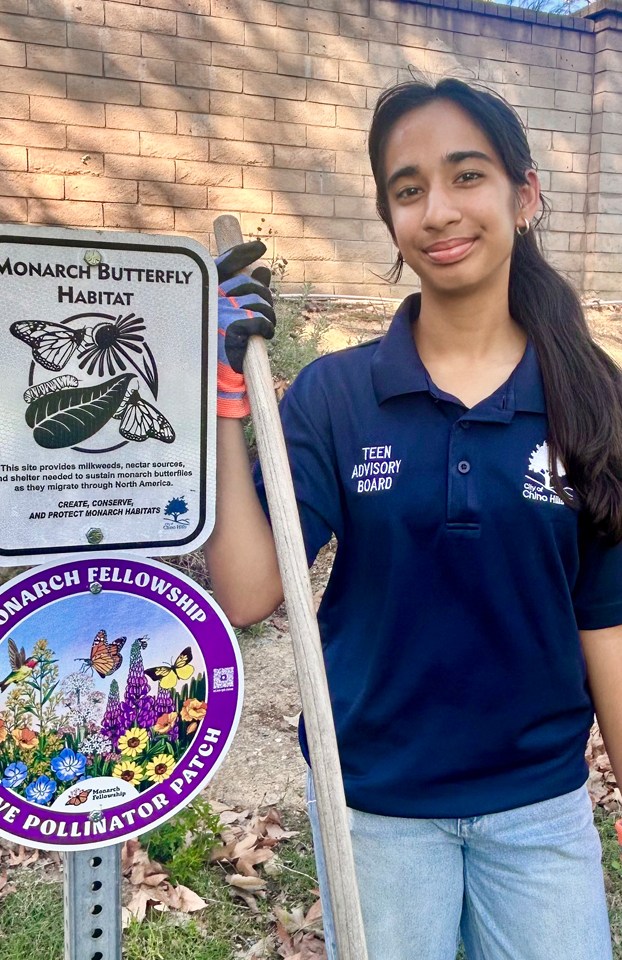
Parthvi Naswa
8th Grade, Canyon Hills Junior High School
Chino Hills, CA
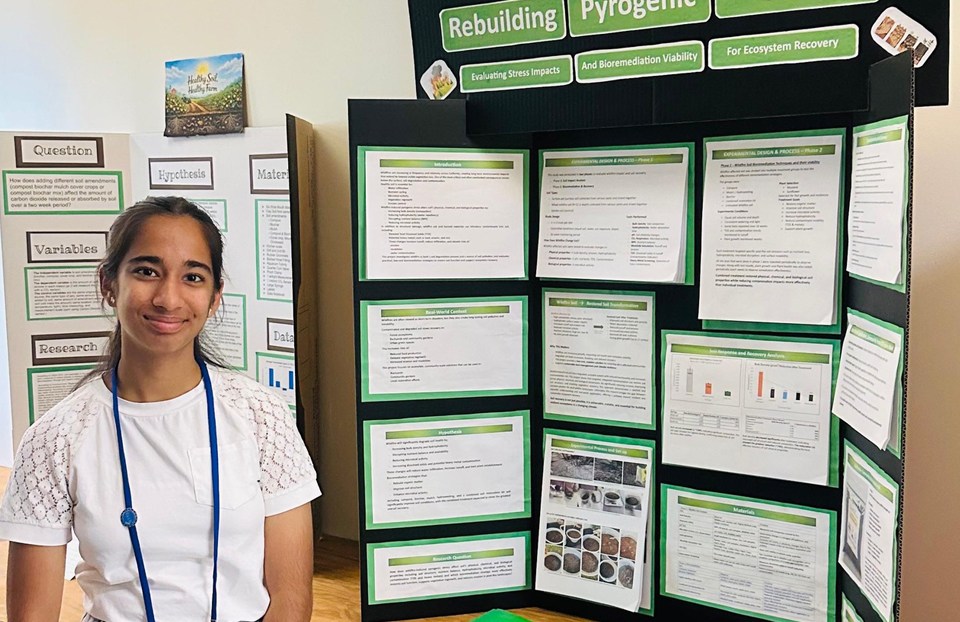
Rebuilding Pyrogenic Soils: Evaluating Stress Impacts and Bioremediation Viability for Ecosystem Recovery
Parthvi studied how soil burned in a wildfire could be improved, by measuring nutrients in burned and nonburned soil and treating the soils with compost, biochar, mulch and a soil restoration kit to see how plant growth was affected. She showed that the soil restoration kits produced the best results.
View Poster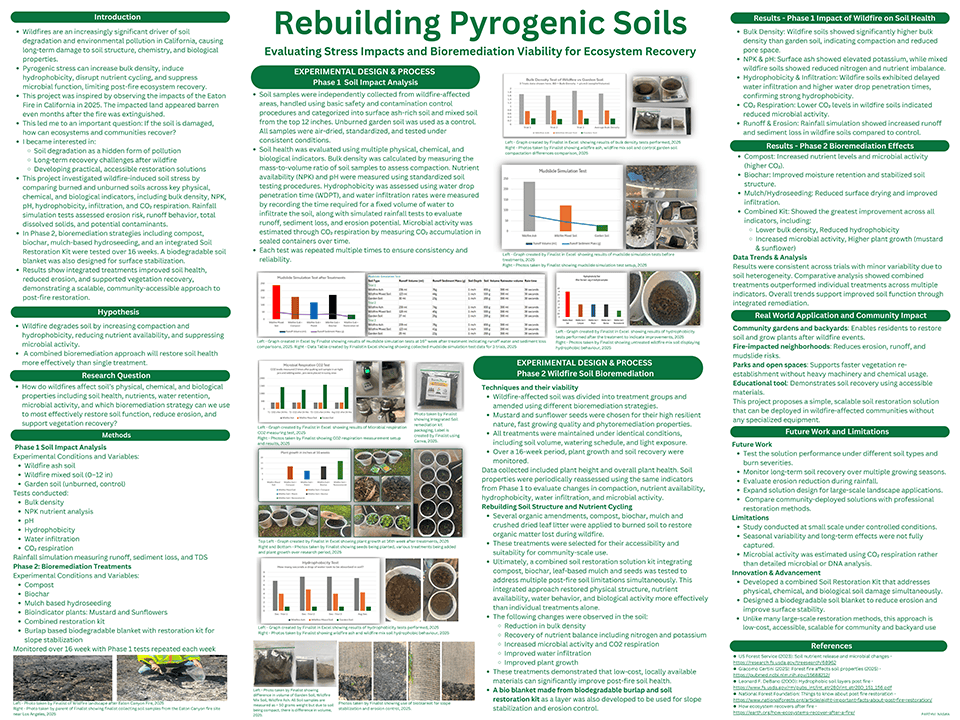
Project Background
Parthvi lives in Southern California, where wildfires are a yearly danger. After visiting a family friend who had been impacted by the 2025 Eaton Fire, “I became curious about what happens to the soil after a wildfire and how long those effects remain,” she says. The damage to homes and plants was obvious, but what about the soil? Parthvi decided to study how fire might impact soil microbes, nutrients and its ability to hold water. She set out to test different ways to improve soil after a fire has burned its way through.
Tactics and Results
Parthvi started by comparing samples of soil that had been through a wildfire with similar samples of control garden soil, testing each three or four times. She measured the bulk density, the pH and nutrients. Parthvi also measured how well the soil absorbed and held water and measured the carbon dioxide the soil gave off to determine the activity of the microbes in the soil. She found soils that had been through a wildfire were more compact and repelled water, making them more prone to erosion. Next, Parthvi tested different ways to improve the soil. She tried compost, biochar, mulch and a soil restoration kit (that contained all three and seeds), testing each method by growing sunflowers and mustard plants in her samples, testing them weekly for 16 weeks. While all of her methods improved soil structure, microbe activity and erosion, the soil kit worked best. A bioblanket also helped to reduce soil runoff.
Beyond the Project
Parthvi is the president of her school’s newspaper club and also contributes to the local newspaper, the Chino Valley Champion. “I enjoy sharing stories about students, community events, and issues that matter to youth,” she says. “I have learned how important communication is in creating positive change.” She also plays the violin and does debate. Parthvi volunteers as a debate coach and tournament judge for younger kids. Debate has helped her become a confident public speaker and has honed her critical thinking, and she hopes to pass on those skills to others.