Science News, Science News Learning, STEM Outreach
Teacher notes: How SNHS impacts student science research in San Jose

In an effort to help science education continue outside of the classroom, the Society recently announced free resources for teachers, parents and students. Science News in High Schools Digital Library has more than 200 original STEM-related exercises, connected to Science News articles covering STEM subjects from public health and climate change to astronomy and neuroscience. Even before learning from home became the new normal, however, the Society’s Science News in High Schools program was already providing resource access to about 5.3 million students domestically and abroad. Hear from Jennifer Claudio, a science teacher at Oak Grove High School in San Jose, California, about how Science News in High Schools resources are helping her achieve different classroom goals and inspiring her students to pursue science research.
How are you
using the program resources in your classroom? Can you share any examples of
how Science News is inspiring student
research?
Early
in the school year, I use the discussion questions as guides for students. In
some years, I create a document where students respond to each other online
whereas other years we sit in a circle and discuss. As the year progresses, I
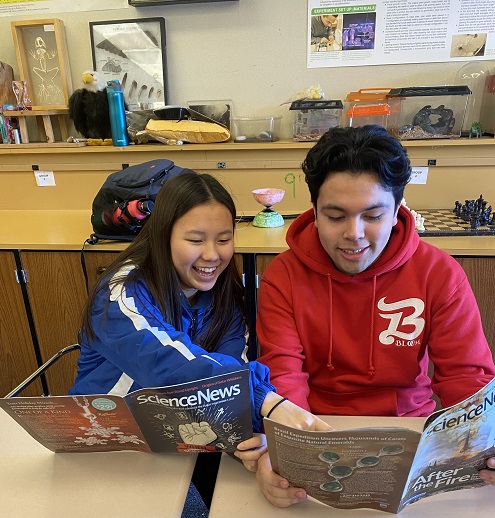
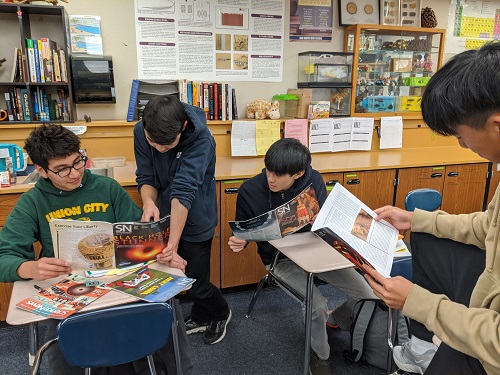
print copies of several of the educator guides and I let students explore them
freely.
A specific feature article that inspired a research project was one about arctic browning. I had a group of students who found it fascinating and considered agricultural and space-technology applications for it, but for their project, focused on the aspect of measuring infrared transmittance. These students won a second place award at our district science fair and, likely by the time we next communicate, will have competed in the regional science fair!
Are there
specific activities your students participate in, using Science News in High Schools, to meet specific classroom goals,
including literacy or STEM standards?
My
activities vary with each cohort of students, but reading Science News helps bridge the gap between reading academic journals
and what exists in popular news media. Science
News allows students to interact with science knowledge in digestible
chunks of information. Specific activities involve having students read the
magazines either individually, in pairs, or in small groups. I also have
students create a mock-science fair board using an article that they’ve
read. Students who are more advanced (or
as they develop research skills) will also track related articles using Google
Scholar searches.
What has the
impact been on your students?
My students know that they have a reliable source for current scientific information. We live in an area with many “big name universities,” and so we forget other hotbeds of research. Science News reminds us that research happens everywhere and inspires us to look beyond what we already know. My students ask questions about articles and my graduates will ask for copies of the magazine. One who is currently serving in the U.S. Marines, for example, reads the articles online, and he says he likes them because the articles are short, hence able to fit into his tight schedules, but makes him feel connected to the life he knew back in high school.
How do you
think Science News in High Schools could
help your fellow educators who are not currently participating in the program?
Science News in High Schools
condenses information in a student-friendly way. Students who have limited time
can also skim articles quickly to get to one of interest. Other educators
should consider participating because of our access to the Educator Guides and
to give students opportunities to read real science articles with current news.
By making Science News a habit for
students, we nurture recreational reading behaviors which consequently builds
transferrable skills in other classes.
Educators who are interested in ensuring their school’s sponsored spot for the next school year can sign up here.